 Ascend
1 / 4
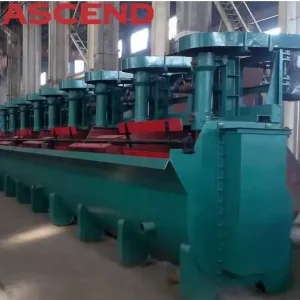
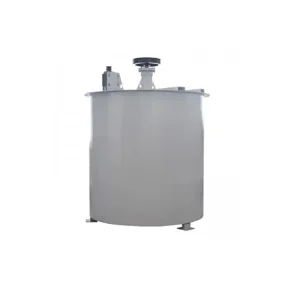
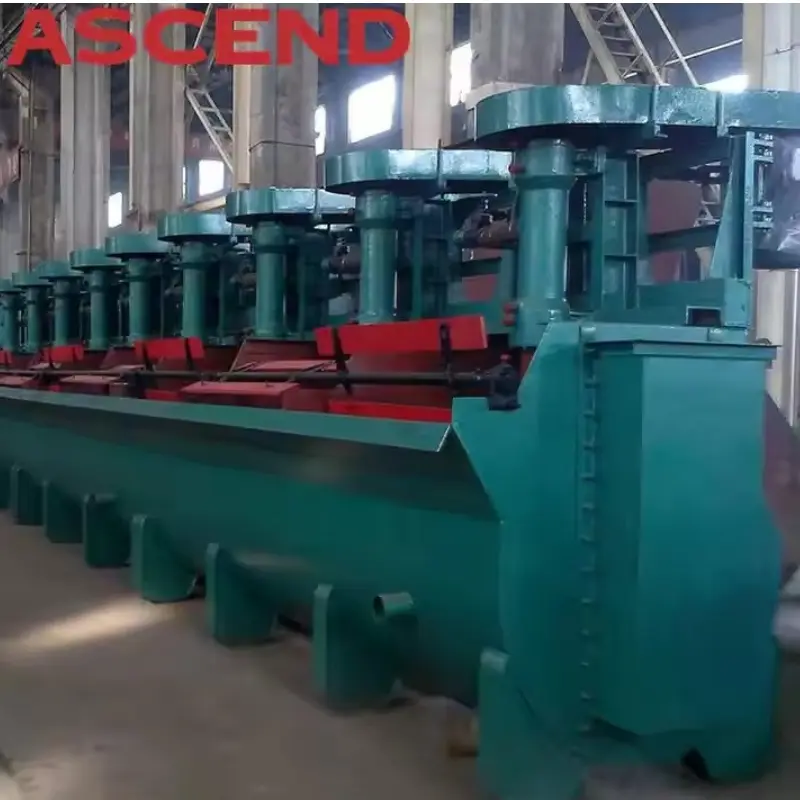
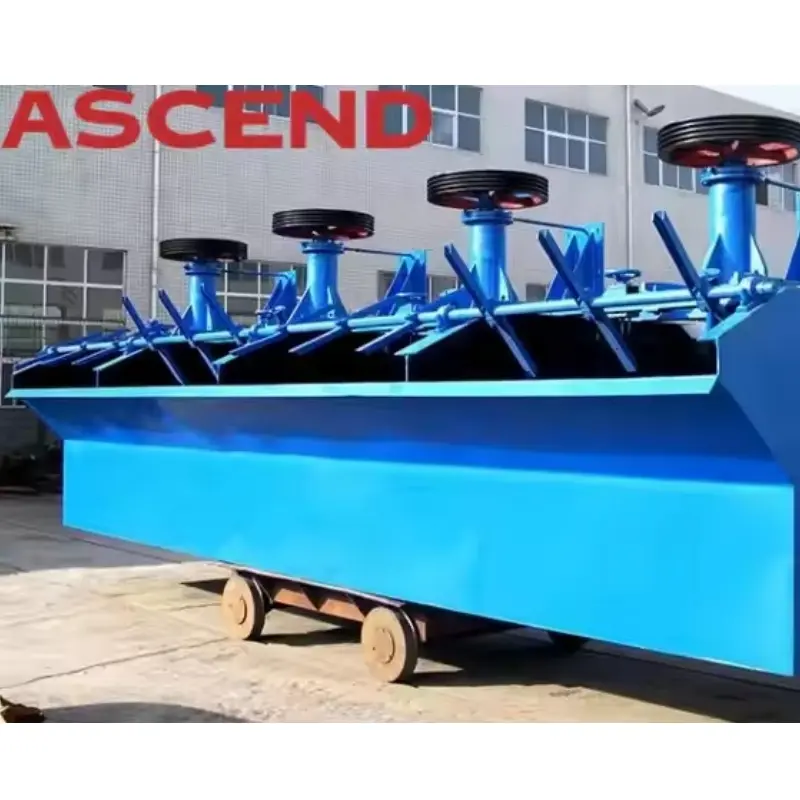
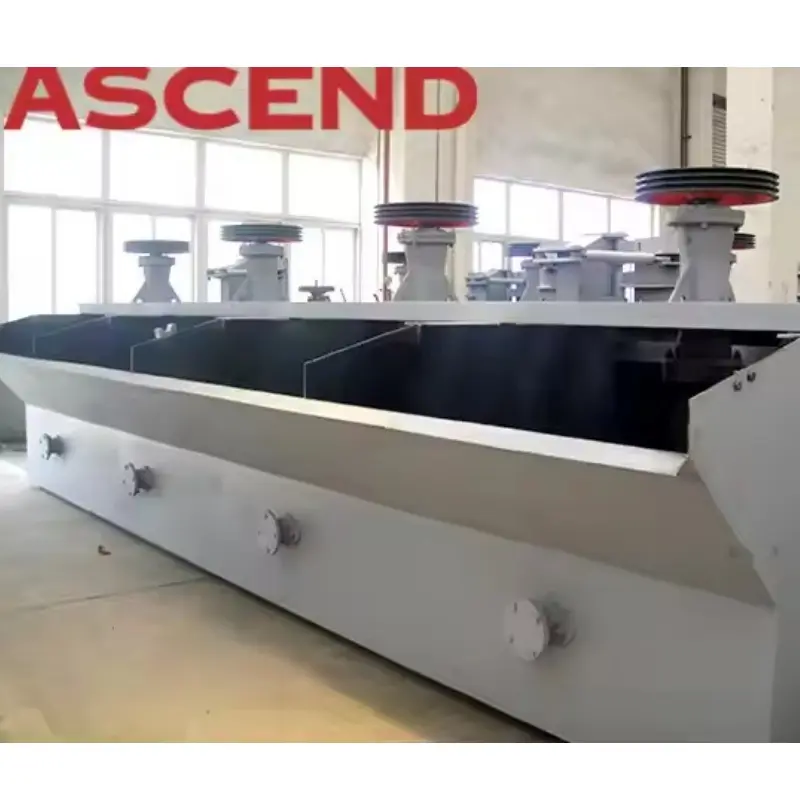
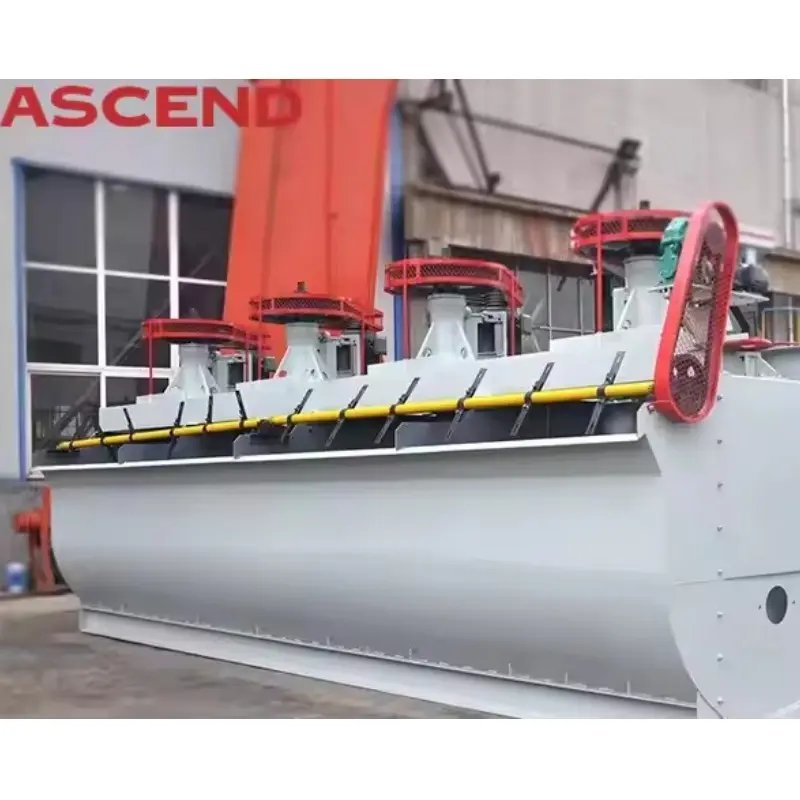
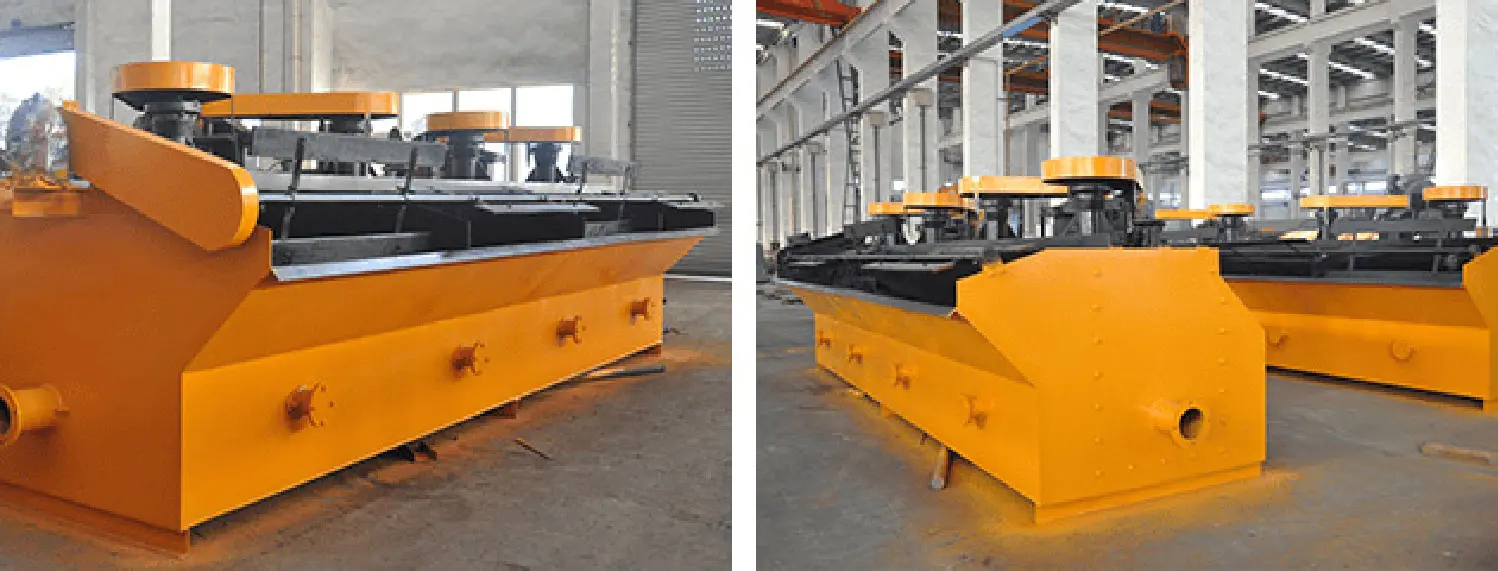
Flotation machine is an equipment for ore beneficiation through separating hydrophobic materials from hydrophilic. It is widely used in recovery for fine minerals of ferrous metal, precious metal, rare metal, nonferrous metal, non-metallic minerals and so on. The flotation machine is mainly composed of slurry tank, agitation device, air charging device, discharge mineralized bubble device, motor. A wide variety of flotation machines are produced, such as mechanical flotation machine, air charging agitation flotation machine and etc. among which mechanical agitation flotation machine is commonly used.
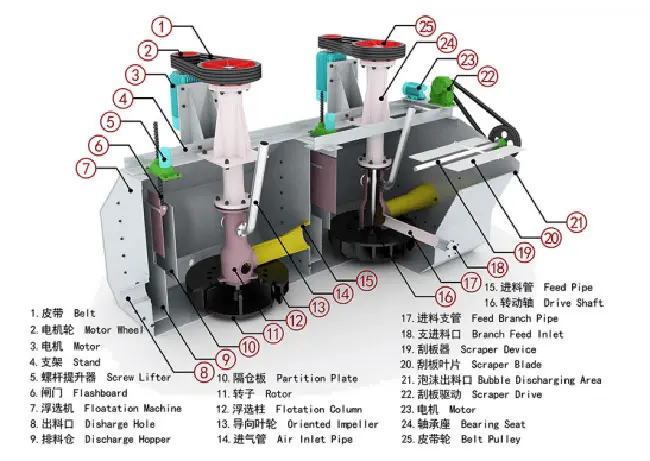
When the flotation machine works, the motor drives the impeller to revolve, producing the centrifugal effect and negative pressure. The grinding ore, water and necessary chemicals are mixed into slurry through the mixing tank. Then it is injected into the slurry tank to start mixing. On the one hand, ample air is absorbed and mixed with mineral slurry to form a large number of bubbles. On the other hand, the mixed mineral slurry is mingled with additive. Meanwhile, the foams get thinner and bounded with minerals. Some mineral particles which are not easy to be wet are generally called hydrophobic mineral particles. They are attached to the foams. Then foams float up to the surface of mineral slurry and become the mineralized foams. Others, which are easy to be wet, are generally called hydrophilic mineral particles. Instead of adhering to the bubble, they will stay in the pulp. At last, it will discharge the mineralized bubble containing specific minerals.
The liquid surface can be adjusted with the height of adjustment flashboard, so that the useful foams are scraped with squeegee.
| Model | SF0.37 | SF0.7 | SF1.2 | SF2.8 | SF4.0 | SF8.0 | ||
| Volume (m³) | 0.37 | 0.7 | 1.2 | 2.8 | 4.0 | 8.0 | ||
| Impeller diameter (mm) | 300 | 350 | 450 | 550 | 650 | 760 | ||
| Capacity (t/h) | 0.2-0.4 | 0.3-0.9 | 0.6-1.2 | 1.5-3.5 | 0.5-4.0 | 4.0-8.0 | ||
| Impeller speed (r/min) | 352 | 400 | 312 | 268 | 238 | 238 | ||
| Motor | model | rotor | Y90L-4 | Y132S-6 | Y13M-6 | Y180L-8 | Y200L-8 | Y200L-8 |
| scraper | Y80L-4 | Y90L-6 | Y90L-6 | Y100L-6 | Y100L-6 | Y100L-6 | ||
| power(kw) | ① 2.2 ② 0.75 |
① 3 ② 0.75 |
① 5.5 ② 0.75 |
① 11 ② 1.1 |
① 15 ② 1.5 |
① 30 ② 1.5 |
||
| Chute weight (kg/chute) | 445 | 600 | 1240 | 2242 | 2660 | 4043 | ||
| Overall dimension (mm) | 700×700×750 | 900×1100×950 | 1100×1100×1100 | 1700×1600×1150 | 1700×1600×1150 | 2250×2850×1400 | ||
A flotation machine is primarily used in mineral processing plants to separate valuable hydrophobic mineral particles from hydrophilic gangue materials. It is widely applied in recovering ferrous, precious, rare, nonferrous metals, and non-metallic minerals.
It functions by mixing ground ore slurry with water and specific chemical additives. Agitation creates a stream of air bubbles; hydrophobic minerals attach to these bubbles and float to the surface as foam, while hydrophilic minerals remain in the slurry.
The equipment typically consists of a slurry tank to hold the mixture, an impeller agitation device to stir the slurry, an air charging system to produce bubbles, a motor to drive the system, and a scraper to discharge the mineralized foam.
Selection depends on your required processing capacity (t/h), the volume (m³) necessary for the treatment time, and technical parameters such as impeller diameter and motor power. Models range from the smaller SF0.37 up to the high-capacity SF8.0.
The liquid surface level is regulated by adjusting the height of the adjustment flashboard. This ensures that the mineral-bearing foam reaches the proper height to be scraped off efficiently by the scraper.
Yes, in addition to ferrous and non-ferrous metals, flotation machines are highly effective for the beneficiation of various non-metallic minerals such as fluorite, phosphate, and quartz.