 Ascend
1 / 5
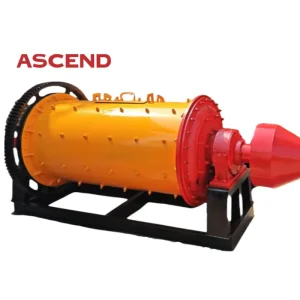
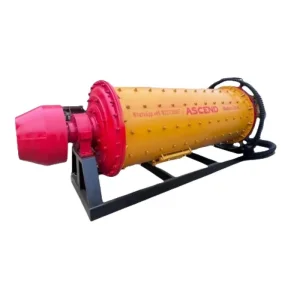
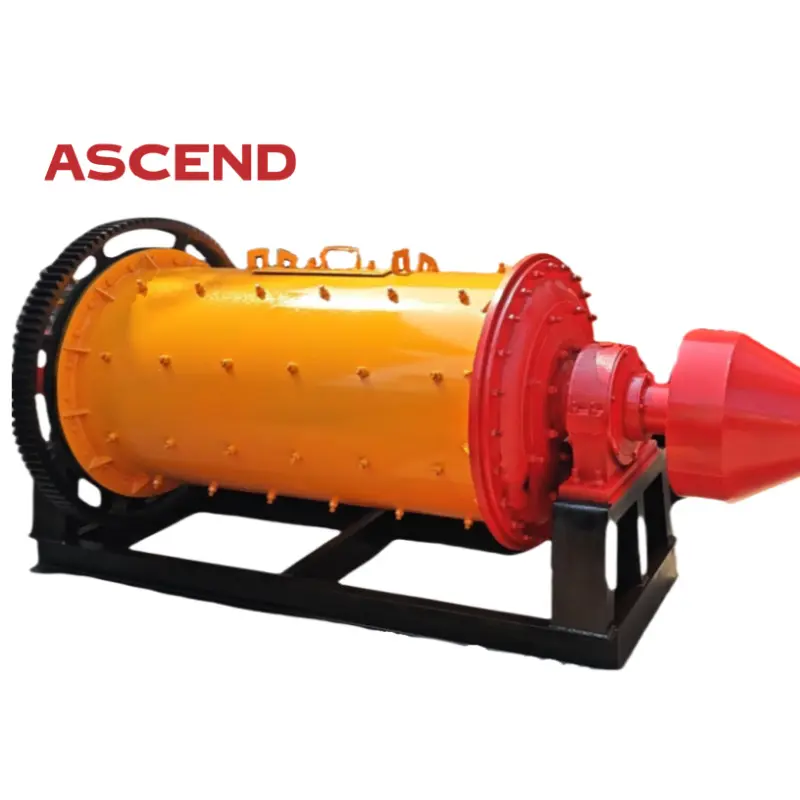
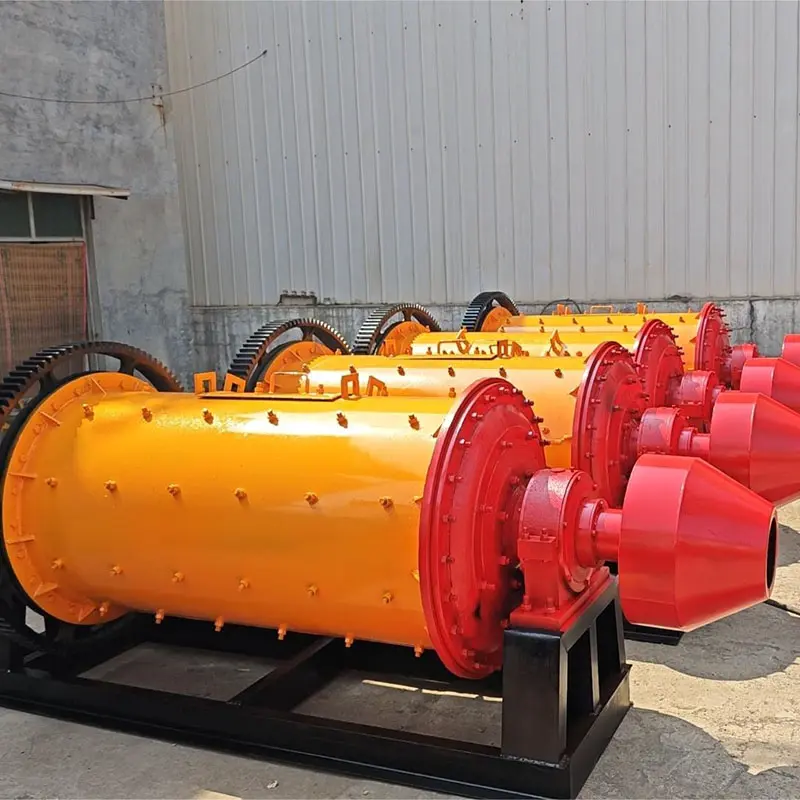
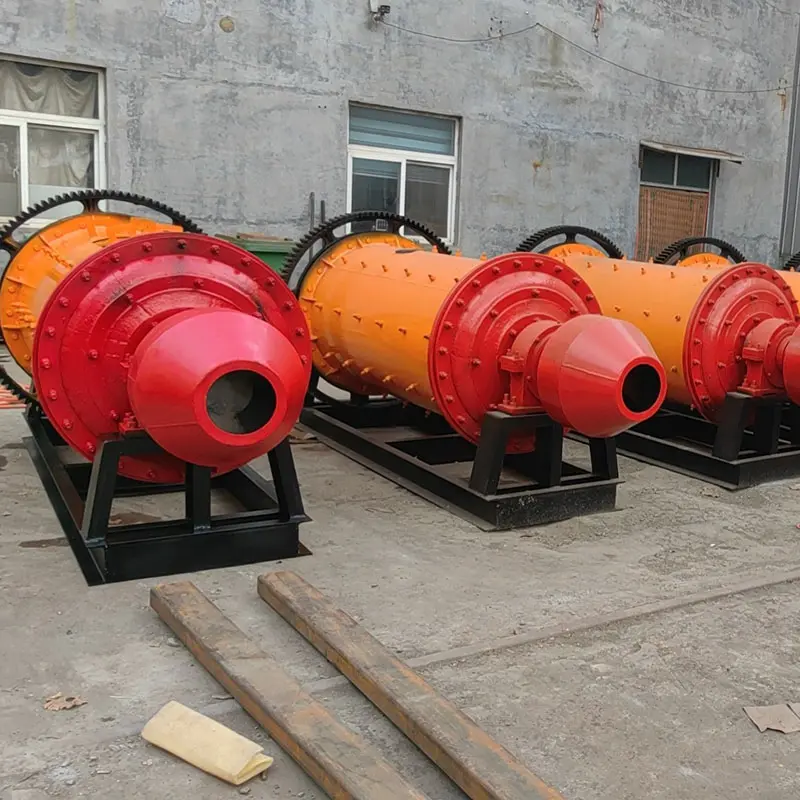
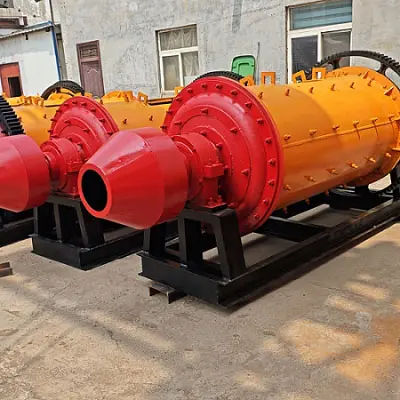
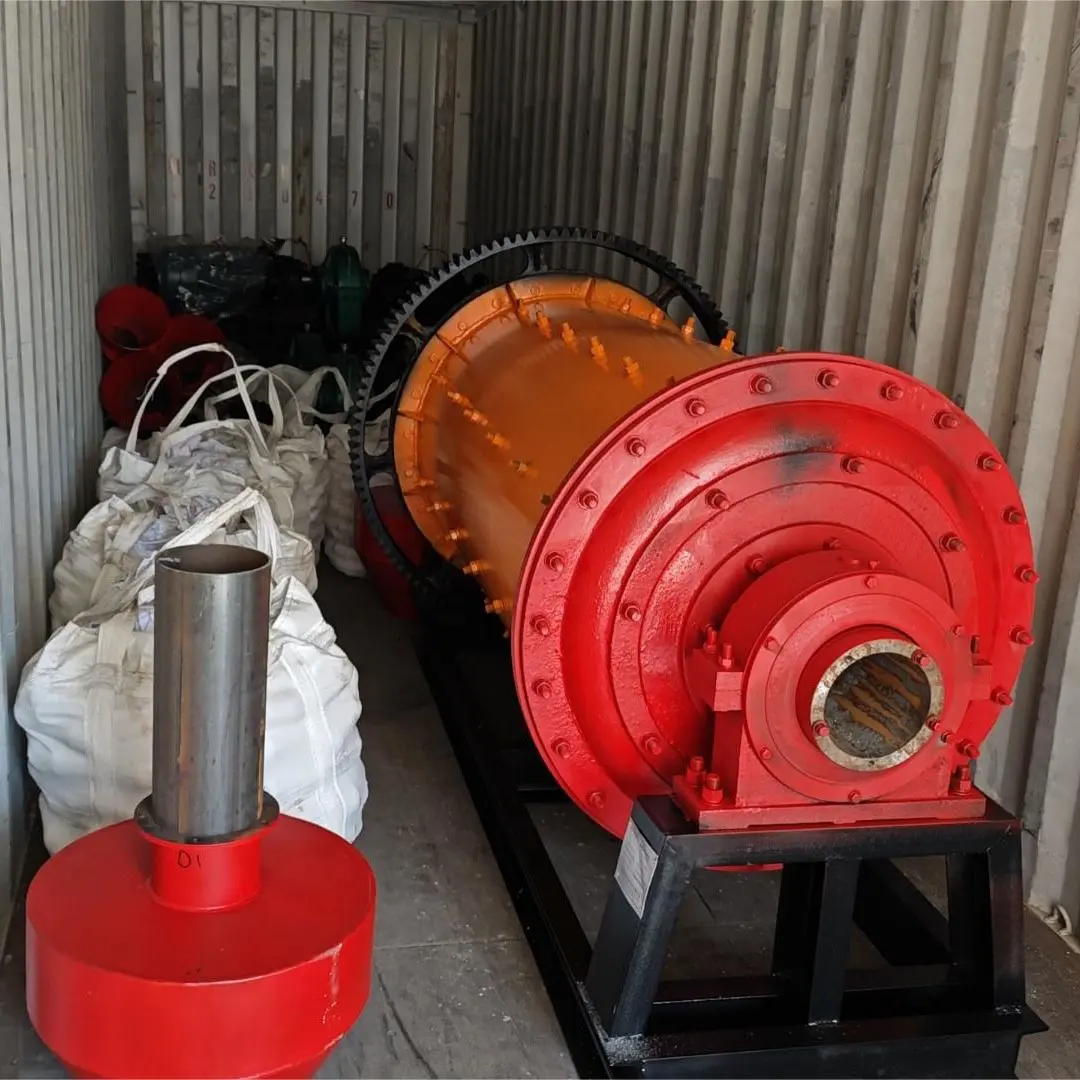
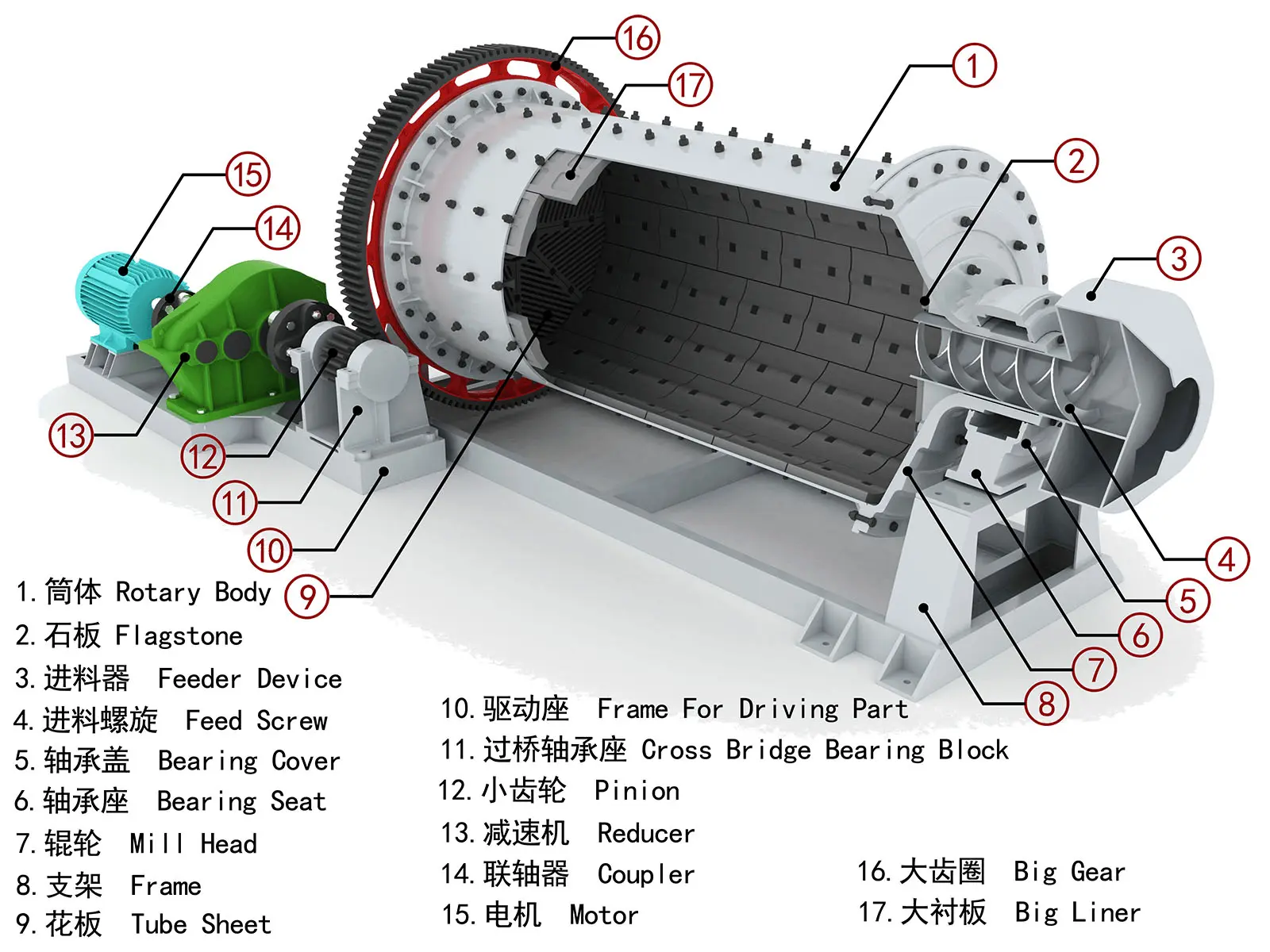
The ball mill grind machine is composed of feeding part, discharging part, rotating part, transmission part (reducer, small transmission gear, motor, electric control) and other main parts. The motor drive the speed reducer, the speed reducer drive the small gear, the small gear drive the big gear, the big gear drive the rotary body moving.
The material enters from the feeding mouth, and ground into powder by the impact of steel balls and ore and self-grinding. There is a grate at the discharging mouth (at the big gear) for filtering. Due to continuous feeding materials, the pressure pushes the material to the discharging mouth, the small particles go out from the grate to the discharging mouth, and the big particles continue to grind. The ore pulp surface in the cylinder is low, which reduces the over-grinding of ore and prevents the steel balls from falling out.
| Type | Rotational speed (r/min) | Balls weight (t) | Feeding size (mm) | Output size (mm) | Capacity (t/h) | Motor power (kw) | Weight (t) |
|---|---|---|---|---|---|---|---|
| Φ900×1200 | 36 | 1.0 | ≤20 | 0.074-0.4 | 0.5-1.5 | 18.5 | 4 |
| Φ900×1800 | 36 | 1.5 | ≤20 | 0.074-0.4 | 0.5-1.5 | 18.5 | 4.5 |
| Φ900×3000 | 36 | 2.6 | ≤20 | 0.074-0.4 | 1.5-4.8 | 22 | 6 |
| Φ1200×2400 | 31 | 3.5 | ≤25 | 0.074-0.4 | 1.6-5 | 37 | 9.5 |
| Φ1200×4500 | 31 | 6.5 | ≤25 | 0.074-0.4 | 1.6-5.8 | 45 | 13.1 |
| Φ1500×3000 | 27 | 6.8 | ≤25 | 0.074-0.4 | 2-6.3 | 75 | 16 |
| Φ1500×4500 | 27 | 10 | ≤25 | 0.074-0.4 | 3-9 | 110 | 19 |
| Φ1500×5700 | 27 | 13 | ≤25 | 0.074-0.4 | 3.6-11 | 130 | 24 |
| Φ1830×3000 | 25 | 10 | ≤25 | 0.074-0.4 | 4-11 | 130 | 25 |
| Φ1830×3600 | 25 | 12 | ≤25 | 0.074-0.4 | 4.3-12 | 155 | 32 |
| Φ1830×4500 | 25 | 15 | ≤25 | 0.074-0.4 | 4.5-16 | 155 | 33.7 |
| Φ1830×6400 | 25 | 21 | ≤25 | 0.074-0.4 | 6-17 | 210 | 38 |
| Φ1830×7000 | 25 | 23 | ≤25 | 0.074-0.4 | 6.5-18 | 210 | 43 |
| Φ2100×3000 | 23 | 13 | ≤25 | 0.074-0.4 | 5-15 | 180 | 32 |
| Φ2100×3600 | 23 | 16 | ≤25 | 0.074-0.4 | 6-17 | 210 | 35.8 |
| Φ2100×4500 | 23 | 20 | ≤25 | 0.074-0.4 | 7-21 | 245 | 42.6 |
| Φ2100×7000 | 23 | 31 | ≤25 | 0.074-0.4 | 8-25 | 280 | 55 |
The ball mill grind machine is primarily composed of the feeding part, discharging part, rotating part, and transmission part (which includes the reducer, small transmission gear, motor, and electric control).
Material enters through the feeding mouth and is crushed into powder by the impact of steel balls and ore, as well as self-grinding during rotation. Small particles are filtered through a grate at the discharging mouth, while larger particles remain for continuous grinding.
Under the same production conditions, the grid mill has a greater production capacity than the overflow mill. The design maintains a lower ore pulp surface in the cylinder, which prevents the steel balls from falling out and avoids over-grinding of the ore.
Energy efficiency is significantly improved by using rolling bearings at both ends of the cylinder instead of traditional sliding bearings, reducing friction and power consumption.
The output size ranges from 0.074 mm to 0.4 mm. Depending on the model selection (from Φ900×1200 to Φ2100×7000), the production capacity varies from 0.5 t/h up to 25 t/h.