 Ascend
1 / 5
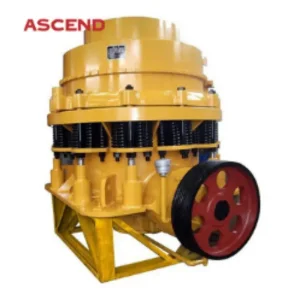
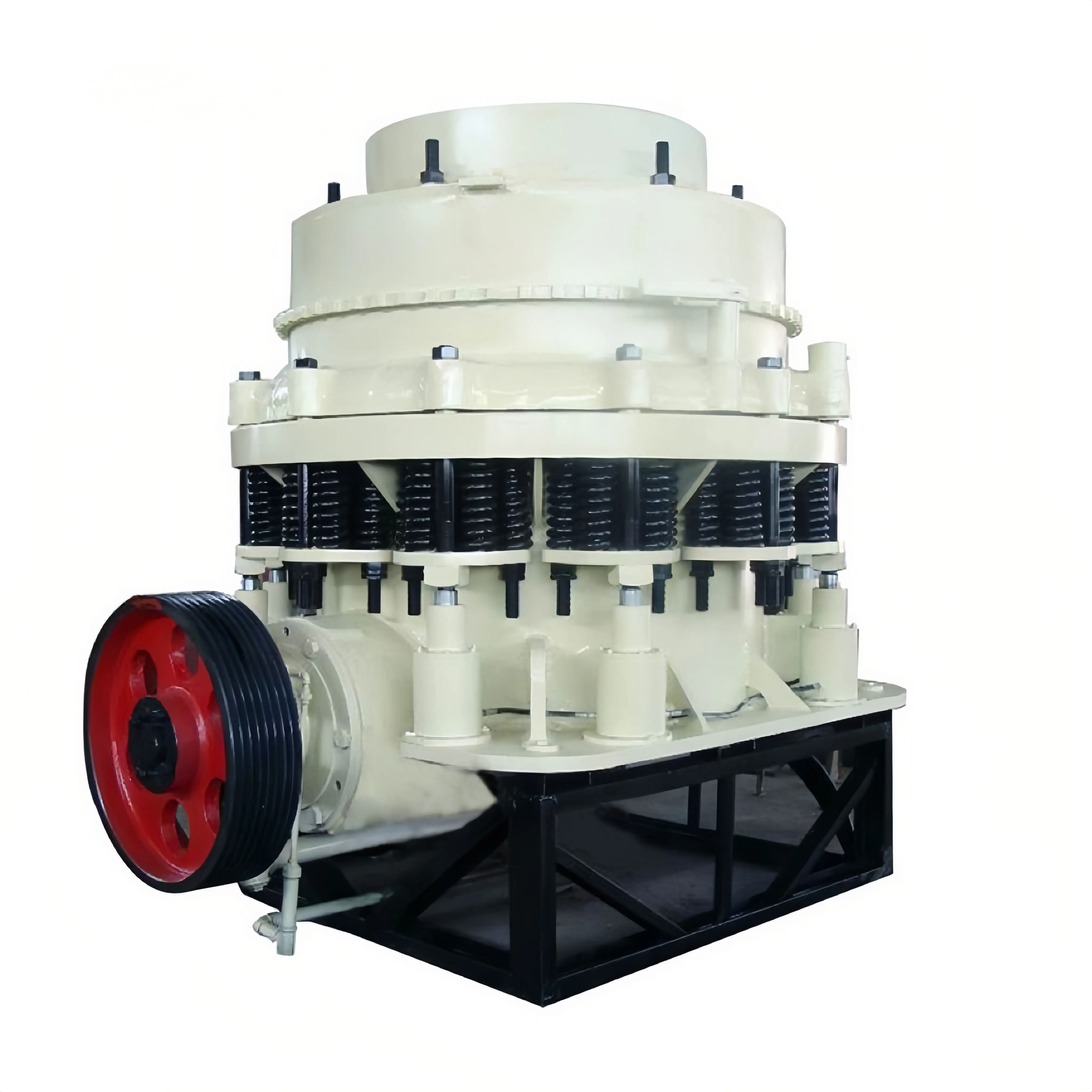
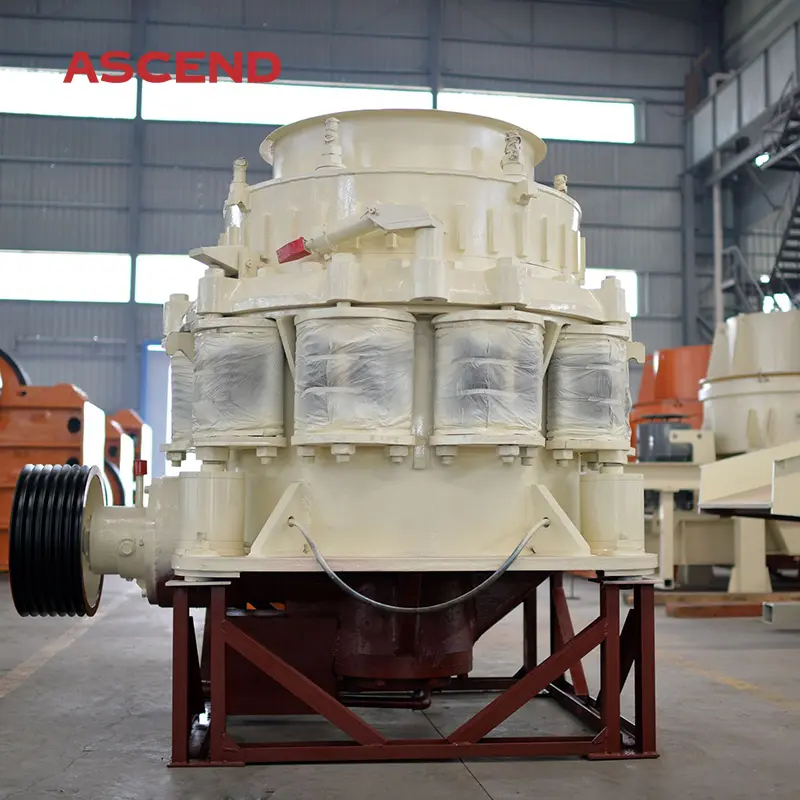
When the spring cone crusher is working, the motor drives the eccentric sleeve to rotate through the transmission device, and the moving cone rotates and swings under the force of the eccentric sleeve. The section where the moving cone is close to the static cone becomes the crushing chamber.
After the crushed material enters from the feed port, it is squeezed and impacted by the moving cone and the static cone for many times to form materials that meet the required particle size. When the moving cone leaves this section, the formed material falls under its own gravity and is discharged from the bottom of the cone.
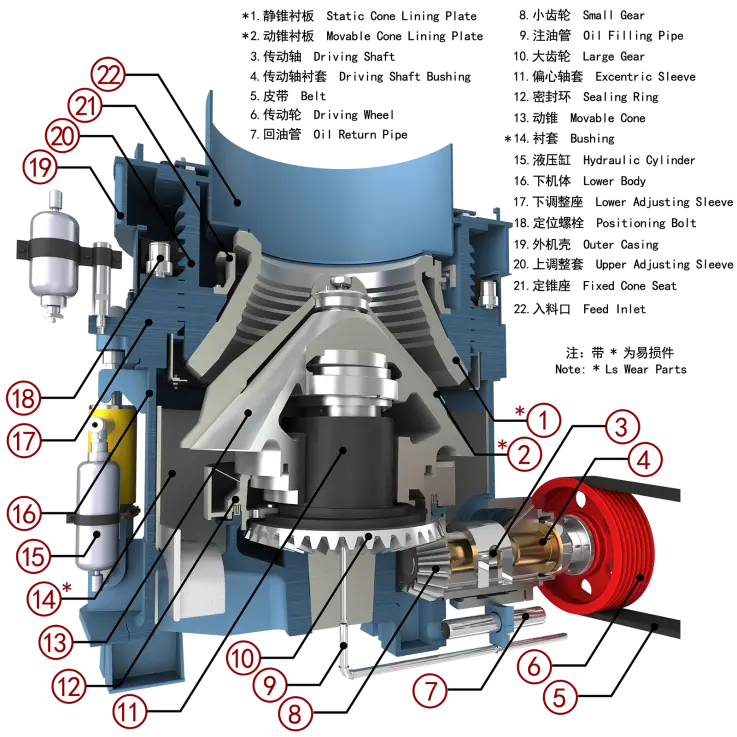
The motor drives the eccentric sleeve to rotate efficiently through the transmission system, guiding the moving cone motion.
Materials undergo continuous squeezing and impact between the moving and static cones to reach precise dimensions.
Once processed, the materials fall naturally under their own gravity to be discharged smoothly from the bottom output.
The motor transmits power to drive the eccentric sleeve to rotate. Under the force generated by the rotating eccentric sleeve, the moving cone is forced to swing and rotate periodically.
The crushing chamber is formed in the section where the moving cone moves closest to the static cone, providing the space needed for compression.
Materials entering from the feed port are repeatedly squeezed, crushed, and impacted between the moving and static cones until they meet the specified target size.
When the moving cone swings away from the static cone section, the processed material falls down by its own gravity and discharges through the bottom opening of the cone.
Gravity acts as the discharging force. Once the materials are crushed to the proper size and the cone moves away, they drop naturally without needing additional mechanical evacuation.