 Ascend
1 / 5
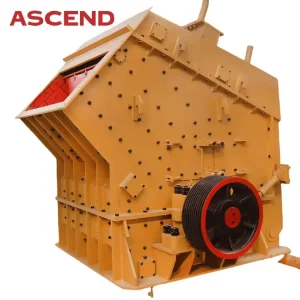
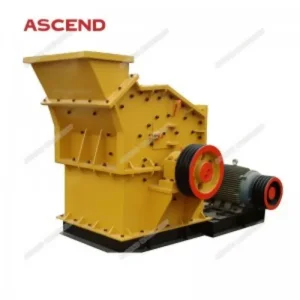
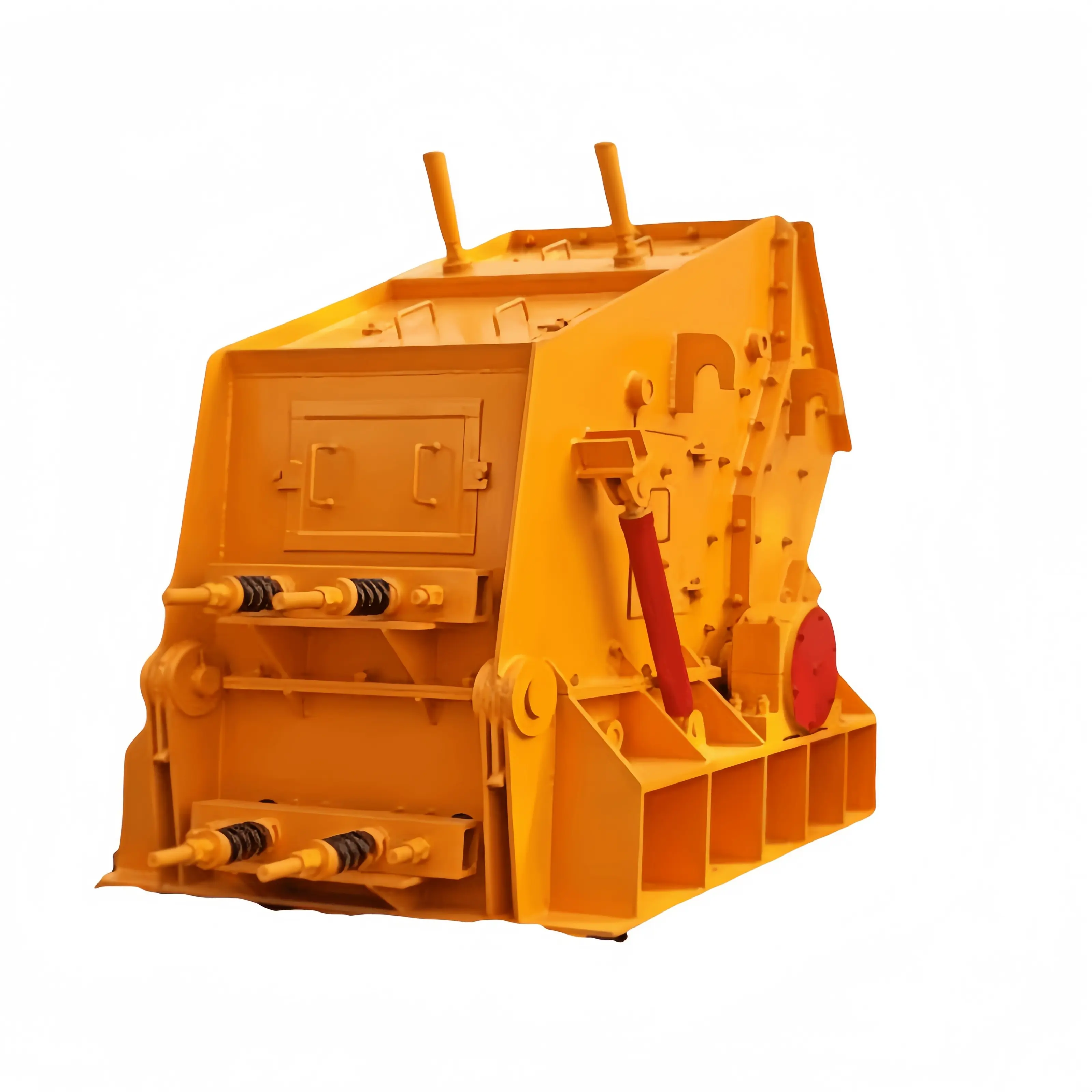
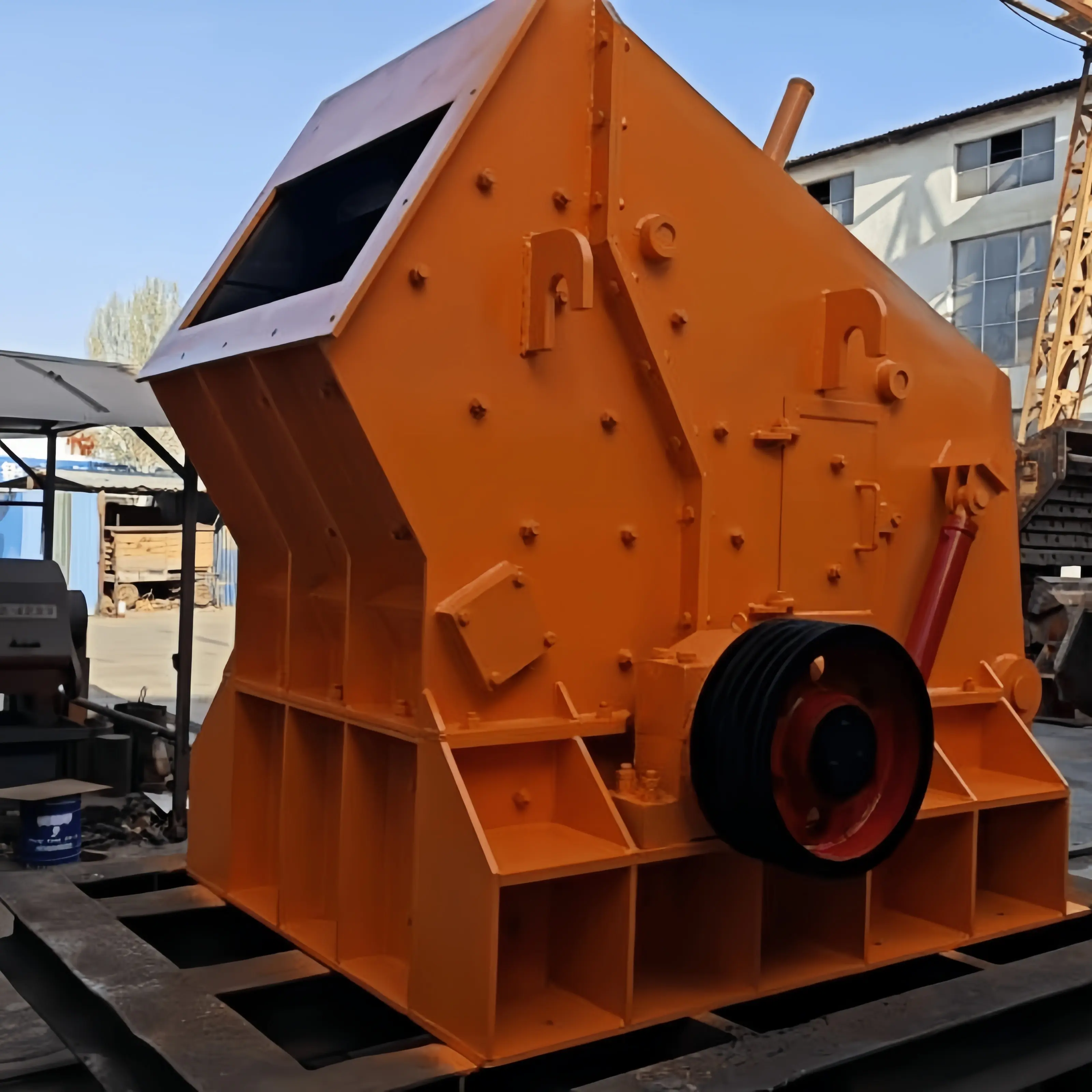
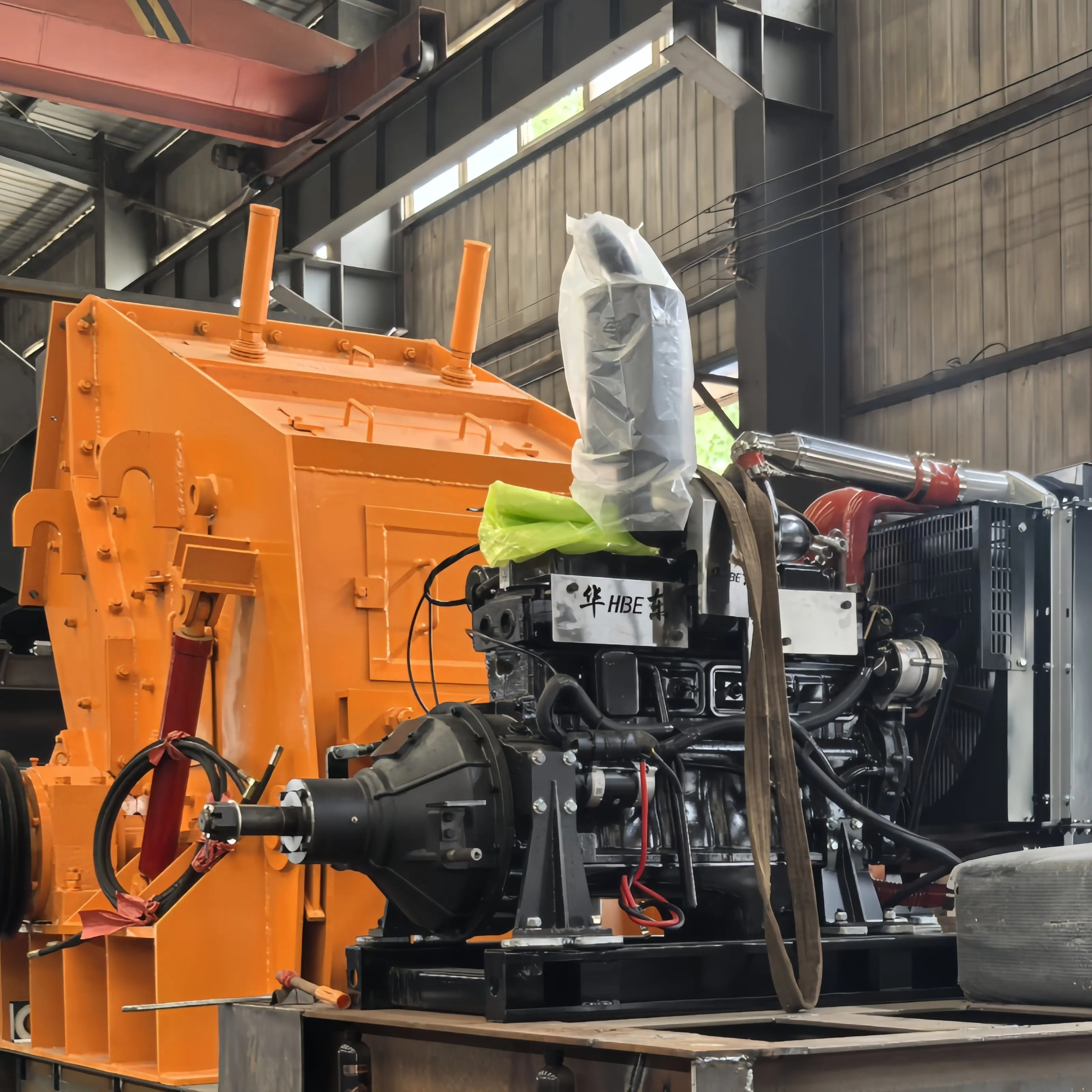
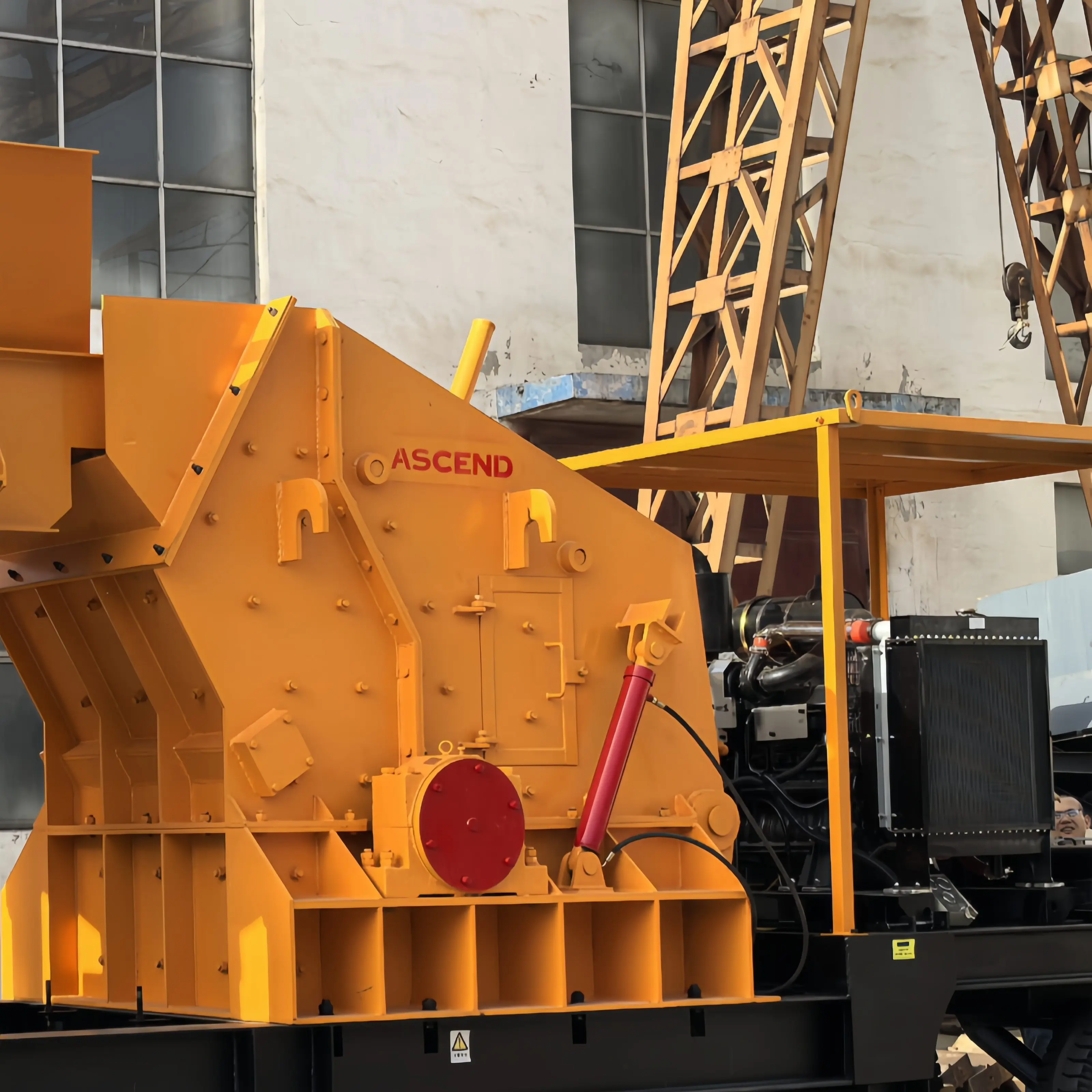
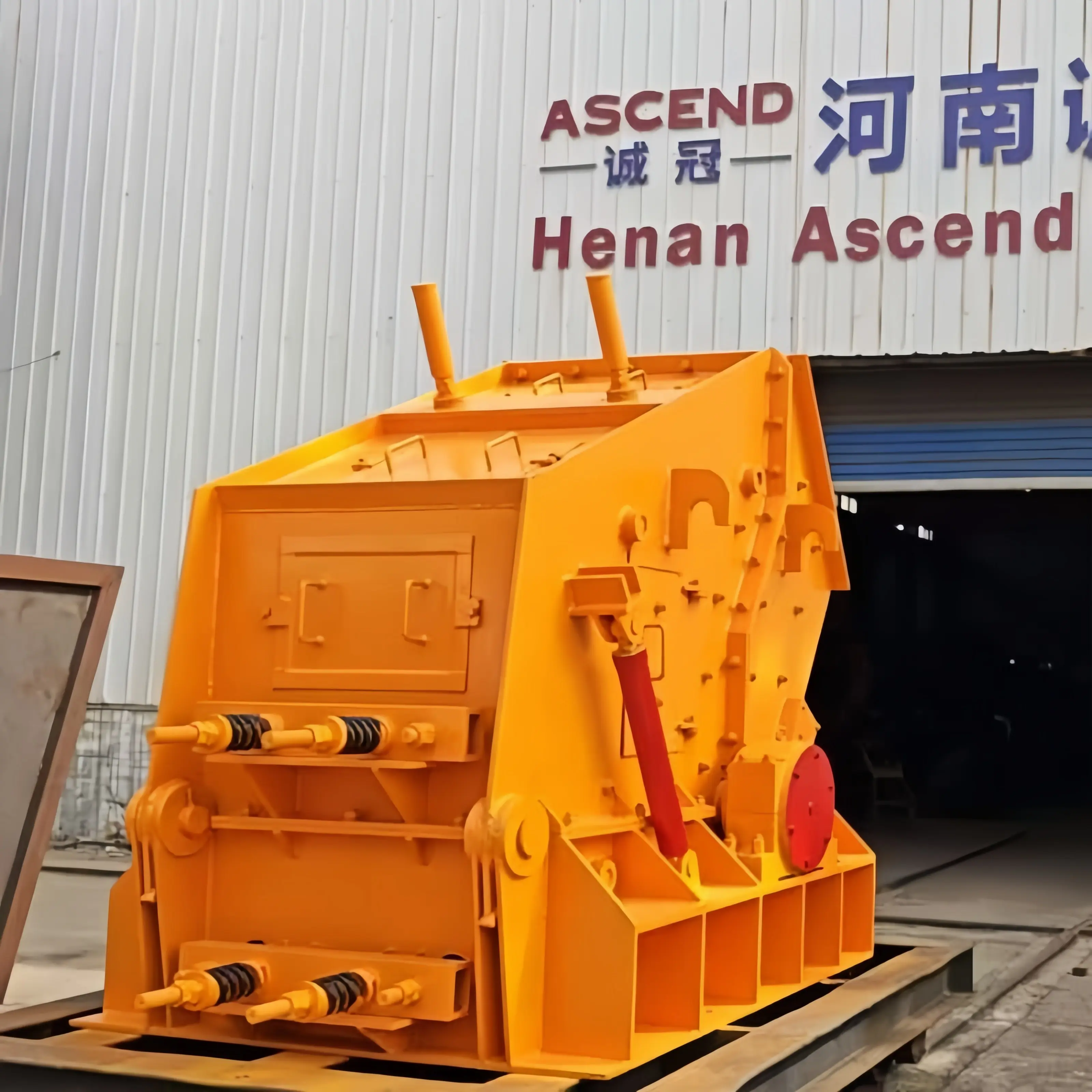
The diesel impact crusher uses a diesel engine to drive the rotor to rotate at high speed. After the material enters the crushing chamber from the feed port, it is hit by the plate hammer on the rotor and thrown to the impact plate. The rebounded material impacts each other with the subsequent material and is hit by the plate hammer again. After multiple "hitting - impact - mutual impact" crushing, the material that meets the particle size requirements is discharged from the bottom discharge port. The discharge particle size can be controlled by adjusting the gap between the impact plate and the rotor.
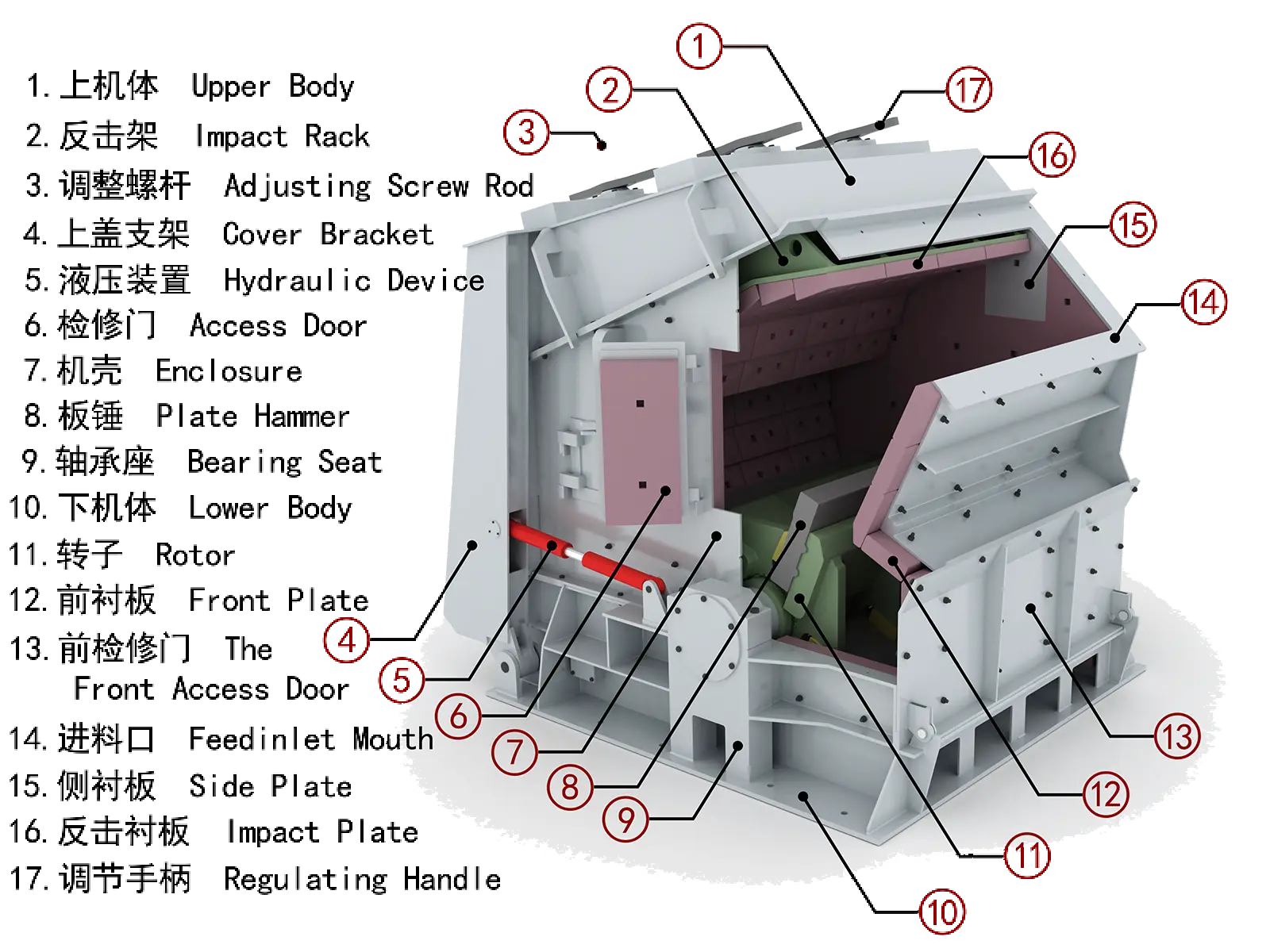
The crusher utilizes a high-speed rotating rotor driven by a diesel engine. Materials entering the chamber are hit by plate hammers, thrown onto the impact plate, and undergo repeated impacts until they reach the required size.
The discharge particle size can be easily controlled and adjusted by changing the gap clearance between the impact plate and the rotor.
A powerful diesel engine is integrated to drive the rotor, allowing high-velocity rotation and high-efficiency crushing operation without relying on electrical power grid connections.
Materials that meet the predefined particle size requirements fall through the crushing chamber and are discharged from the bottom discharge port of the machine.
The high efficiency is achieved through a multi-stage crushing process, involving direct impact from the plate hammer, collision with the impact plate, and mutual collision between flying materials.