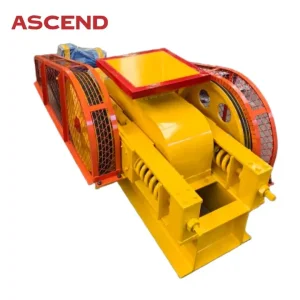
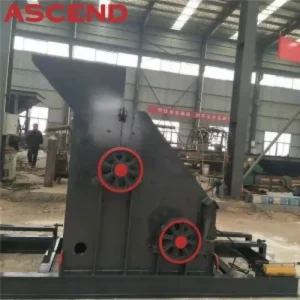
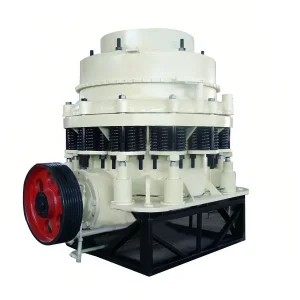
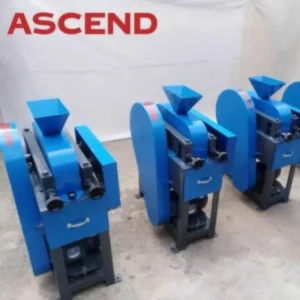
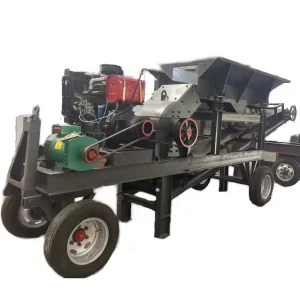
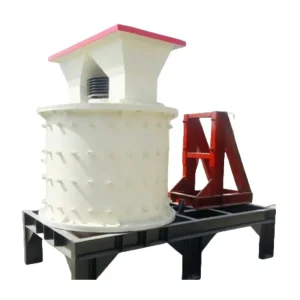
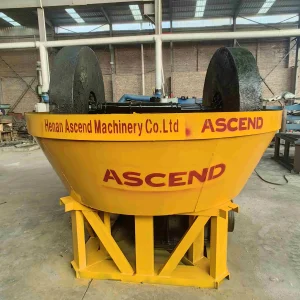
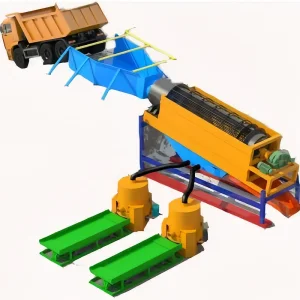
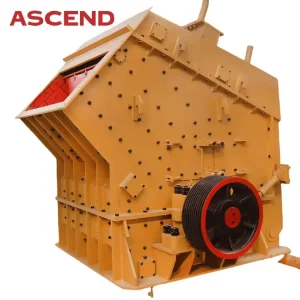
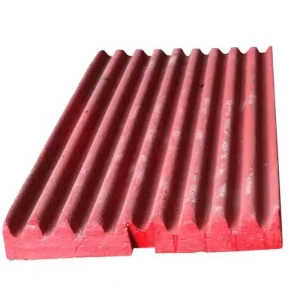
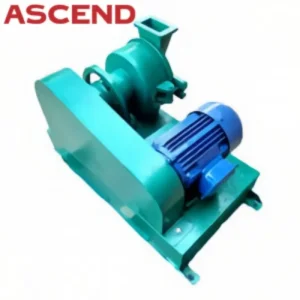
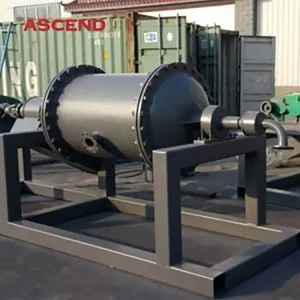
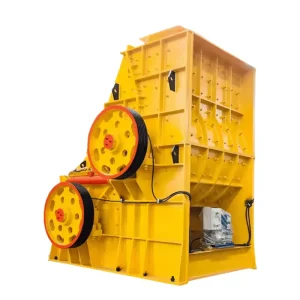
Explore our foundational lines of engineering equipment designed for heavy-duty primary reduction and pre-concentration processes.
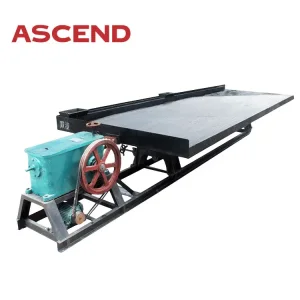
The 6S shaking table (also known as a diagonal table concentrator) represents the gold standard of gravity concentration for fine-grained mineral processing. Operating on the principle of differential movement under the combined influence of asymmetrical reciprocating motion, deck inclination, and cross-flowing wash water, it achieves highly selective separation of minerals based on their specific gravity (SG) differentials.
During operation, the mechanical head motion drives the table deck along its longitudinal axis. The asymmetric kinematics feature a rapid forward stroke followed by a sudden retraction, creating a powerful inertial force that shears the pulp layer. Heavy mineral particles settle through the fluid boundary layer to the deck surface, where they are trapped by the riffles. Light gangue minerals, remaining suspended in the upper fluid layer, are swept downward across the riffles by the wash water.
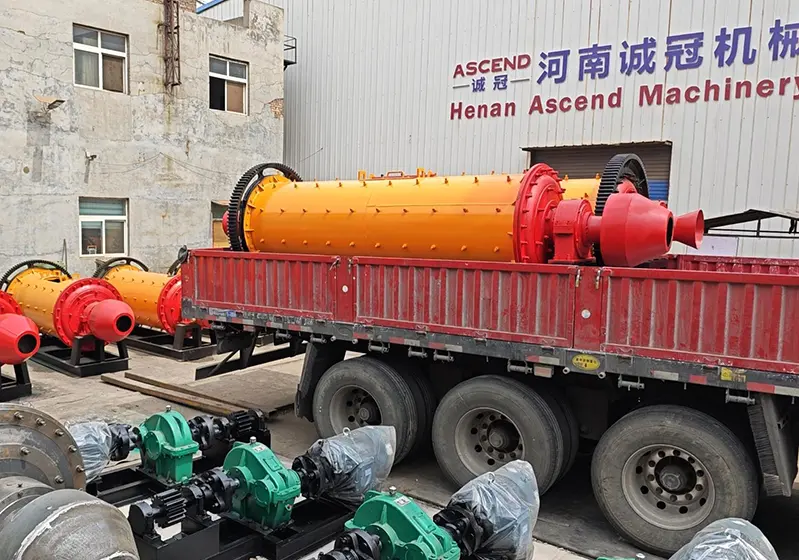
Understanding the manufacturing excellence, material developments, and scale economies that position Chinese suppliers at the forefront of mineral processing tech.
Modern Chinese factories utilize high-strength, glass-fiber-reinforced plastics (FRP) with built-in carborundum wear layers. This makes the deck structurally rigid, deformation-resistant, and highly resilient against chemical wear in corrosive mining environments, extending the operational life up to 10-15 years.
The self-oiling, cast-iron head motion mechanism (enclosed in a heavy gear case) ensures consistent stroke length and frequency with minimal thermal expansion. Designed with robust double-rocker arms and high-tensile spring setups, it provides reliable 24/7 service under high structural loads.
From custom rifle spacing for specific gravity matching to specialized supports (channel steel foundations, concrete pedestals, or mobile structures), Chinese manufacturers offer deep engineering customization to match site-specific terrain, altitude, and local slurry variables.
A detailed engineering matrix detailing stroke adjustments, feed size limitations, and capacity benchmarks for optimal gravity separation.
| Deck Configuration | Feed Size Range (mm) | Capacity (t/24h) | Stroke Length (mm) | Stroke Frequency (Hz) | Water Consumption (t/h) |
|---|---|---|---|---|---|
| Coarse Sand Deck (6S-A) | 0.5 - 2.0 mm | 30 - 60 | 16 - 22 mm | 240 - 280 strokes/min | 1.5 - 2.5 |
| Fine Sand Deck (6S-B) | 0.074 - 0.5 mm | 15 - 30 | 11 - 16 mm | 280 - 320 strokes/min | 0.8 - 1.5 |
| Slime Deck (6S-C) | 0.037 - 0.074 mm | 5 - 15 | 8 - 11 mm | 320 - 360 strokes/min | 0.3 - 0.8 |
How 6S shaking tables are paired with crushing, milling, and classification circuits to optimize mineral recovery flowsheets globally.
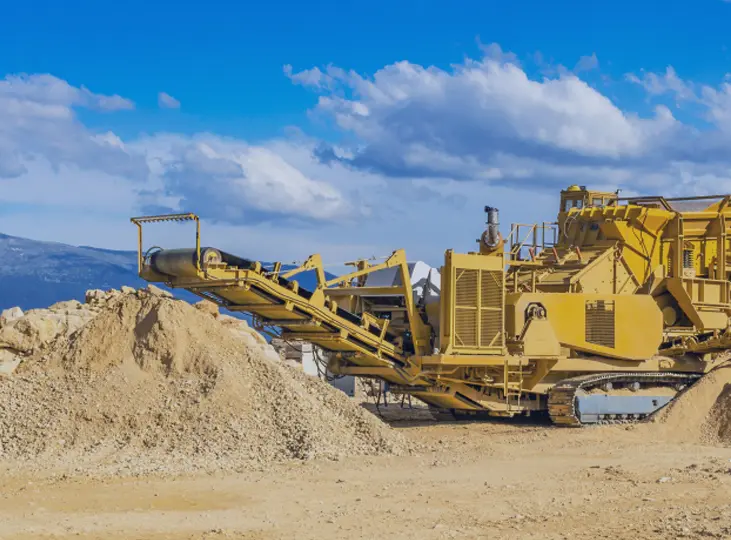
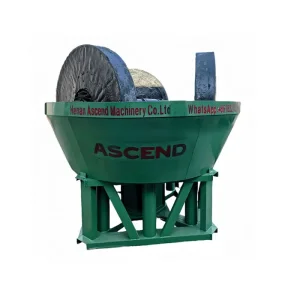
In gold extraction, 6S tables are used after wet pan mills or ball mills to recover free gold before flotation or cyanidation. This prevents gold over-grinding and significantly reduces processing chemical costs.
Learn More →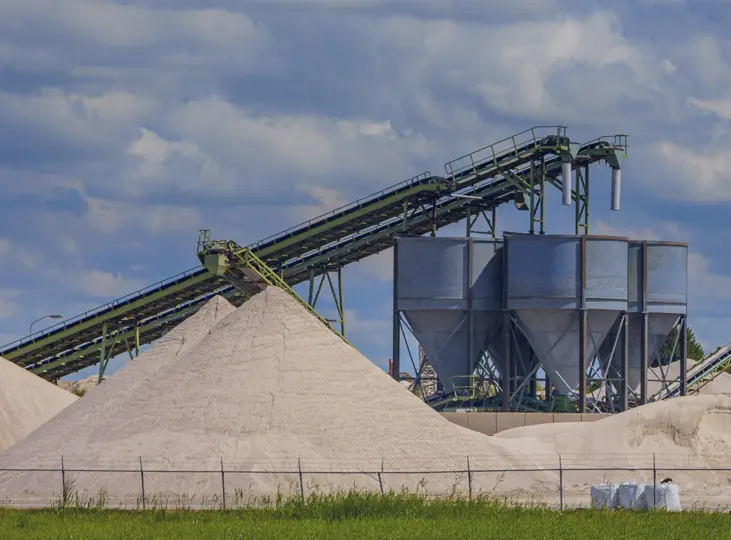
Due to the high specific gravity of Cassiterite (Tin) and Wolframite (Tungsten), the 6S Shaking Table serves as the primary separation stage, providing high grade concentrates with minimal mineral loss.
Learn More →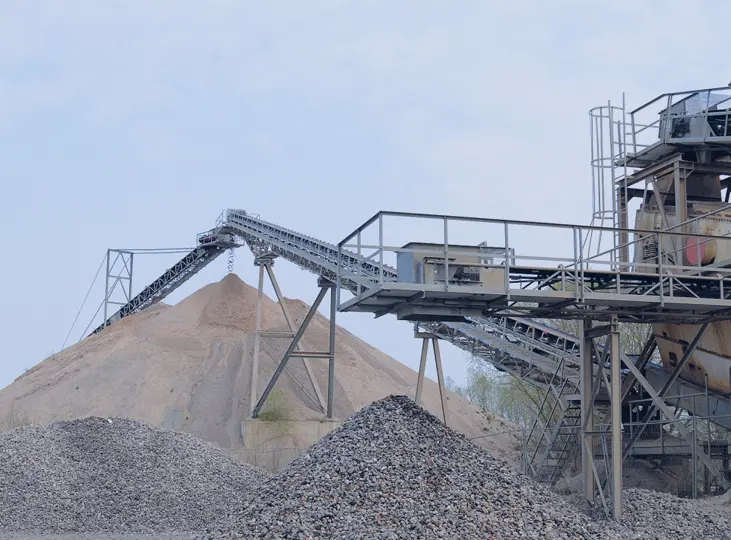
Separation of iron contaminants from silica sand and fine ash reduction in wet coal processing. Utilizing optimized flowsheets ensures high throughput compliance for glass and metallurgical markets.
Learn More →
Ascend Machinery has built operational footprints in over 130 countries. Our 6S Shaking Tables are widely used in remote gold mines, high-throughput tin deposits, and industrial mineral processing lines, showing excellent mechanical stability and high recovery rates.
"Our alluvial gold project in Sudan saw a 14% increase in gold recovery after replacing old jigs with a battery of Ascend 6S Shaking Tables. The FRP deck resists high temperatures and works stably in harsh desert mining conditions."
— Plant Operator, Sudan Gold Project
Through careful adjustments of stroke frequency, feed water velocity, and deck slope, we optimize operations across diverse terrains and climates—from the high altitudes of Papua New Guinea to the tropical regions of Zambia and Tanzania.
How automation, environmental compliance, and structural material updates are shaping the next generation of shaking tables.
Modern processing plants are testing visual sensors to monitor real-time mineral zoning on the table deck. These systems automatically adjust deck slope and water wash volume via actuators, keeping gold and heavy mineral recovery rates stable during feed variations.
As mercury and cyanide regulations tighten globally, gravity separation is becoming even more critical. 6S shaking tables provide a clean, chemical-free way to pre-concentrate heavy minerals, reducing chemical usage down the line.
For remote alluvial operations, modular and containerized designs are highly preferred. Standardized 6S shaking tables can be assembled on steel skids with quick-connect piping, reducing installation time in remote mining regions.
Using polyurethane and composite materials on deck surfaces improves wear resistance. These materials prevent groove scouring, preserve riffle profiles, and maintain consistent separation quality even with abrasive quartz sands.
Get answers to common operational questions, troubleshooting tips, and best practices directly from our senior metallurgy team.
The choice depends on feed particle size. If feed size is between 0.5 mm and 2.0 mm, select a coarse sand deck with deep riffles. For 0.074 mm to 0.5 mm, choose a fine sand deck. If handling fine slimes between 0.037 mm and 0.074 mm, use a flat slime deck with shallower riffles to allow fine heavy particles to settle without being washed away by turbulence.
Generally, the cross-slope is set between 1.5° and 5°. For coarser materials, use a steeper slope (3° to 5°) and more wash water. For fine slimes, use a flatter slope (1.5° to 2.5°) and lower water velocity. You can adjust the slope using the handwheel mechanism on the rocker arm assembly while checking the mineral zone profile on the deck.
Uneven water distribution is often caused by an unlevel deck, blocked water distribution holes, or a tilted feed box. To resolve this: 1. Use a level tool to verify the longitudinal axis of the table deck is horizontal. 2. Clear any mineral deposits or algae from the water box wash holes. 3. Adjust the wash water valve to maintain uniform flow across the entire deck surface.
For new installations, change the gear oil after the first 100 operating hours to flush out wear particles from break-in. During regular operation, check the oil level weekly and change it every 6 months or 2,000 operating hours. Always use recommended industrial gear oil (e.g., L-CKC150 or equivalent) to protect internal bearings and gears.
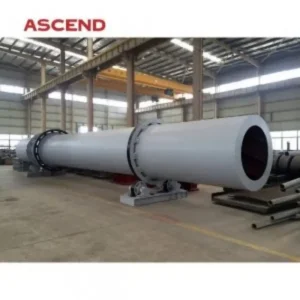
Complete your milling flowsheet with our line of secondary crushers, wet pan mills, rotary dryers, and heavy gravity separators.
 Ascend