High-Quality Small Ball Mill Manufacturer & Companies

Providing advanced fine grinding technology, high-precision pilot test engineering, and durable materials processing solutions globally.

2005
Established Year
130+
Exporting Countries
100%
Engineered In-House
24/7
Technical Support

1. Industrial Context & Structural Mechanics of Small Ball Mills

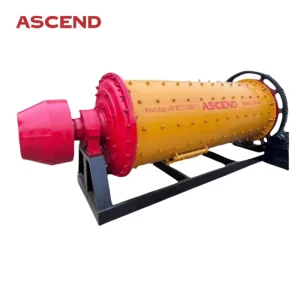
In high-precision mineral processing, advanced chemical synthesis, and metallurgy, the small ball mill remains an essential workhorse. Unlike large-scale industrial mills that handle massive throughputs, small ball mills (typically characterized by diameters ranging from 900mm to 1500mm and lengths less than 3000mm) are uniquely engineered for application flexibility, operational precision, and optimized energy usage.

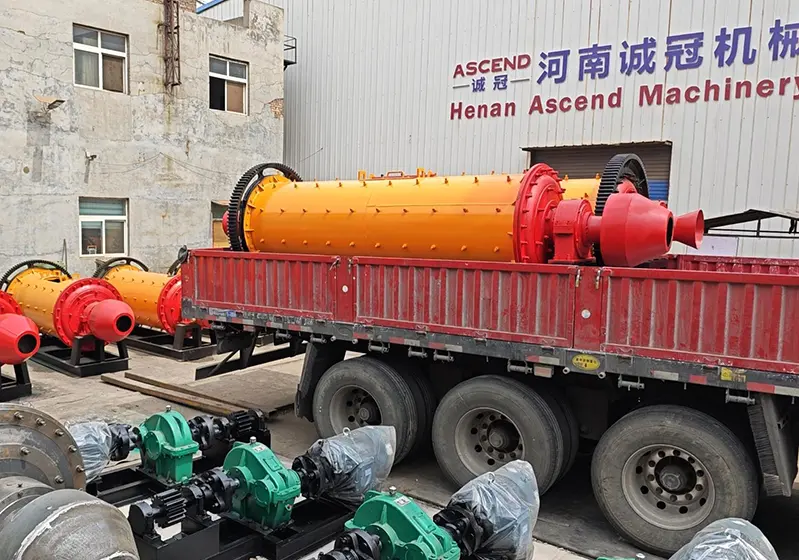
Structurally, a high-quality small ball mill consists of a hollow cylindrical shell that rotates about its horizontal axis. The shell is loaded with grinding media—typically high-chromium steel balls, alumina balls, or zirconia beads depending on purity requirements. The inner wall is lined with wear-resistant liners (such as manganese steel, rubber, or specialized ceramics) to prevent abrasion and corrosion. The kinetic energy generated by rotation lifts the grinding media, which then drop to impact and grind the material through shear, attrition, and impact forces. Operating parameters such as the critical speed ratio, charge volume of grinding media, and feed size distribution must be precisely calculated to achieve optimal grinding efficiency and output fineness.

2. Global Market Dynamics & Evolving Industry Trends

The global demand for small ball mills has surged, driven by several macro-economic trends and technical shifts:

  • Rise of Small-Scale Mining and Micro-Grinding Facilities: In regions like South-East Asia, Central Africa, and parts of South America, medium and micro-scale gold beneficiation setups are transitioning away from chemical-intensive methods toward mechanical gravity concentration, which requires efficient primary grinding.
  • Pilot Plant Trials and Mineralogical Research: Mining conglomerates and universities require pilot scale mills to test the Bond Work Index (BWI) and run continuous test operations before investing in multi-million dollar large-scale operations.
  • Technological Shift to Wear-Resistant Compounds: Advanced polyurethane and rubber composite liners are increasingly replacing steel liners in small mills to reduce weight, reduce operating noise, and dramatically lower power consumption.
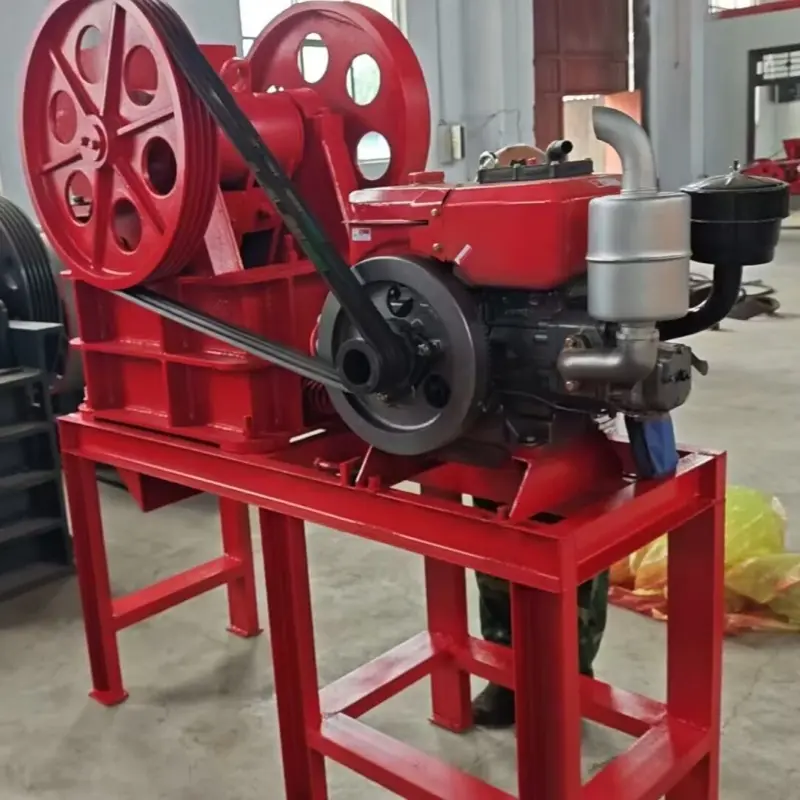
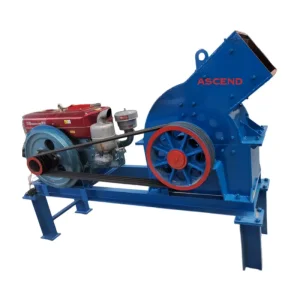
  • Demand for Green Energy Integration: With off-grid mining operations shifting to hybrid energy, modern diesel-engine driven and VFD (Variable Frequency Drive) controlled ball mills allow operators to maximize yield while utilizing fluctuating power grids or remote diesel generators.

3. Comprehensive Engineering Procurement Guidelines

Procurement departments must focus on critical engineering metrics when sourcing high-quality small ball mills rather than solely focusing on low initial pricing. An optimized sourcing strategy should take into account:

  • Material Compatibility & Contamination Risks: If grinding silica, quartz, or pharmaceutical compounds, iron contamination is critical. Sourcing companies must request alumina or rubber lining with ceramic grinding media. For standard gold or copper ore gravity circuits, high-manganese steel is cost-effective.
  • Liner Configurations: Wave liners, step liners, and smooth liners perform differently. Wave liners are designed for coarse grinding by lifting the media higher, while smooth liners are optimal for fine attrition.
  • Power Transmission Type: Small ball mills are powered either by belt drives or direct gear drives. Belt-driven models offer simpler maintenance, whereas gear-driven models offer superior torque transmission and higher efficiency.
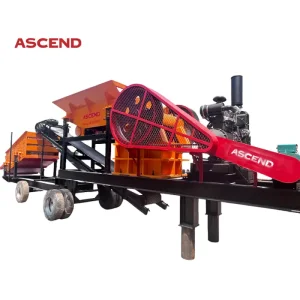
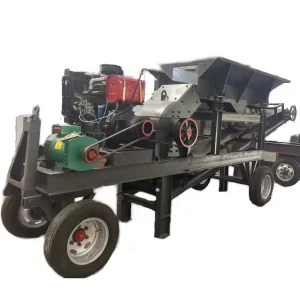
  • Operational Footprint & Portability: Many operations require containerized or trailer-mounted configurations. A compact foot-print with a robust structural skid makes relocation to new mining fields straightforward.

4. Technical Roadmap & Future Engineering Milestones

Looking ahead, the development of grinding technology focuses on sustainability and digital integration. Manufacturers are investing in:
  • Smart Sensors and Thermal Diagnostics: Integrating vibration and bearing temperature sensors to predict mechanical failure before it causes operational downtime.
  • Closed-Loop Control Systems: Automatic feed rate controllers that sync with downstream classifiers (trommel screens, spiral classifiers, or cyclones) to prevent over-grinding and optimize particle size distribution.
  • Optimized Structural Alloys: Utilizing high-strength structural alloys to reduce shell weight, allowing larger volume capacities without increasing energy draw.
Engineered Flowsheets

Tailored Mining Project Solutions

Gold ore project and solutions

Gold ore project and solutions

Learn More
Mining solutions

Mining solutions

Learn More
Mining solutions

Mining solutions

Learn More
Mining solutions

Mining solutions

Learn More
Technical Specifications

Popular Product Deep Dive

Global Footprint

On-site Commissioning Cases

Plant lighting LED case

Industrial Beneficiation Site 1

View Gallery
Plant lighting LED case

Crushing Site 2

View Gallery
Plant lighting LED case

Processing Site 3

View Gallery
Plant lighting LED case

Grinding Operation 4

View Gallery
Plant lighting LED case

Mining Solution Case 5

View Gallery
Plant lighting LED case

Global Export Case 6

View Gallery
Henan Ascend Machinery Factory Floor

AscendAbout Us

Henan Ascend Machinery & Equipment Co.,Ltd. was established in 2005 and it is located in the high-tech zone of Zhengzhou City, Henan Province. Ascend has developed steadily since its establishment. Its business covers more than 130 countries and regions around the world, especially in Africa and Southeast Asia. Also, Ascend machine quality and after-sales service have won widespread praise from international customers.

Ascend is mainly engaged in the research and development, manufacturing, sales and after-sales service of complete sets of crushing, grinding, screening, feeding and conveying heavy mining machinery. If you need to crush limestone, granite, gravel or other stone, or grinding them into powder, or extract gold, please feel free to contact us. Just tell us your needs and our engineers can provide you with professional advice. And we have our own factory, the quality of the machine is guaranteed, the price is more advantageous. We believe that we will be your good choice.

Read More About Our Company
Procurement Q&A

Small Ball Mill FAQ

Q1: How do I select the right lining material for a small ball mill?
The choice depends on your target material and contamination constraints. For processing abrasive metal ores like gold, copper, or iron, High-Manganese Steel or alloy steel liners are ideal due to high impact toughness. For silica-free applications, ceramics, glass, or high-purity chemicals, Alumina or Rubber liners are preferred to avoid iron contamination.
Q2: What is the optimal critical speed for operating a small ball mill?
Most small ball mills operate at 65% to 80% of their theoretical critical speed. Operating below this range results in cascade grinding (wear through attrition), whereas exceeding this range causes centrifugal flight where the balls stick to the shell, preventing impact. Ascend's Variable Frequency Drives (VFD) allow operators to fine-tune this parameter.
Q3: Can these ball mills operate off-grid using diesel power?
Yes. Ascend supplies integrated diesel engine drive configurations specifically engineered for remote mining sites in regions like Papua New Guinea, Zambia, and Sudan, where grid connectivity is absent or unstable.
Q4: What are the key maintenance procedures to guarantee long mill lifetimes?
Crucial maintenance includes regular inspections of liner wear bolt tightness to prevent slurry leakage, ensuring correct lubricating oil levels in the main bearings, and checking the ball load ratio monthly. Worn liners must be replaced before they compromise the integrity of the outer steel shell.