A Mobile Jaw Crusher Plant is judged in the field, not just by its specification sheet. It must accept uneven feed, reduce material consistently, and move between sites without slowing the crew. The USGS Mineral Commodity Summaries 2025 estimated U.S. construction sand and gravel production at about 960 million metric tons in 2024. That scale helps explain why dependable crushing equipment matters, although this figure measures aggregate production—not mobile crusher sales or demand.
For buyers comparing China Top Mobile Jaw Crusher Plant Manufacturers, the practical checks are specific: feed opening, jaw setting range, hourly capacity, fuel use, dust control, and service access. Look closely at the sample material. Wet clay can cling to a feeder. Abrasive rock can accelerate jaw-plate wear. A compact chassis is useful, but only when transport dimensions and site access also fit the job. Small details matter.
Mineral-processing author Barry Wills’ published work emphasizes designing processes around the material being treated. A useful paraphrase of that principle is: “Choose the crusher for the feed and operating conditions, not the brochure.” This is not a verbatim quotation. It is a reminder to verify manufacturer claims against test data, operating references, and parts support. Buyers should request a clear capacity basis, including feed size and material characteristics. Figures without those conditions can mislead. A sound comparison is rarely perfect, and site trials may reveal gaps that a catalog cannot.
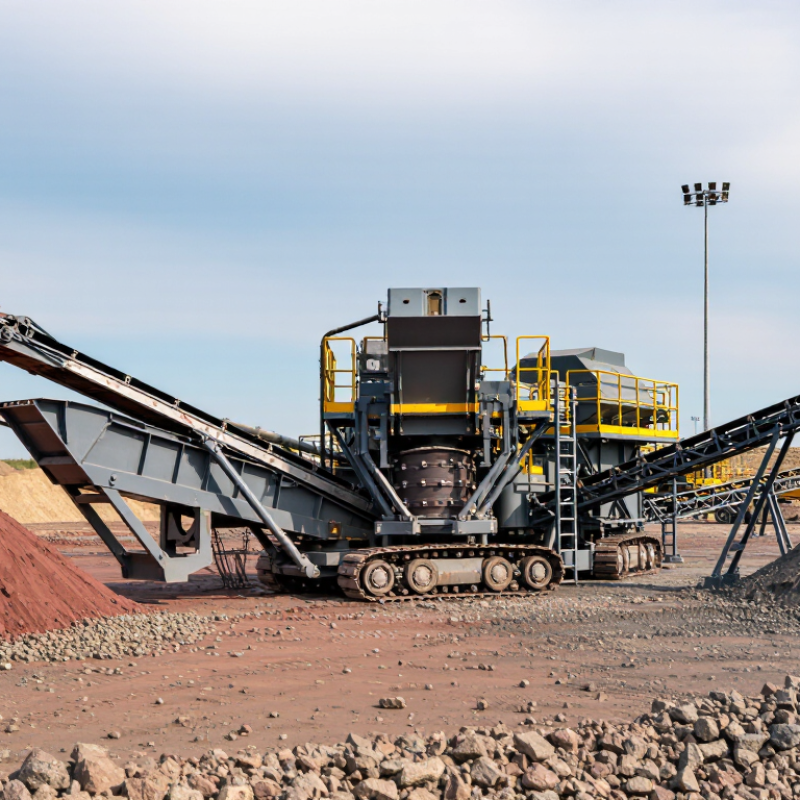
A mobile jaw crusher plant combines a feeder, jaw crusher, discharge conveyor, and mobile chassis. Its parts travel together, so crews can process rock closer to where it is excavated. The jaw crusher has one fixed jaw and one moving jaw. Feed material enters the gap from above. As the moving jaw presses against the fixed one, large pieces break into smaller fragments. The crushed material drops onto a conveyor for stockpiling or further processing. Simple in principle.
Plant layouts vary. Some use tracks for rough, uneven ground; others use wheels for easier road transport. Operators adjust the jaw setting to influence the product size, but the result also depends on rock hardness, feed size, and how evenly material enters the chamber. A common mistake is to feed too much at once. It can reduce throughput and create uneven wear. Wet, sticky material may also bridge in the feeder. Still, a process diagram can make operation look easier than it is. Regular checks of wear parts, belts, and feed conditions matter, and the best setup depends on the actual site.
A mobile jaw crusher plant works as a linked system, not just a crusher on tracks. A vibrating feeder meters rock into the jaw and often separates small fines through a grizzly section. The jaw’s fixed and moving plates break large pieces under compression. A diesel-electric or electric power system drives the equipment, while conveyors move crushed material away. Tracks, hydraulic supports, guards, and dust-control sprays support relocation and daily operation. Small parts matter.
The crushing stage starts with controlled feeding. Oversized rocks enter the jaw; undersized material may bypass it, reducing unnecessary wear. Operators adjust the closed-side setting to influence product size, then inspect the discharge for bridging or uneven flow. A screen can be added to separate size fractions, with oversize returned for another pass in a closed circuit. A clean diagram hides a messy truth: wet fines can blind a grizzly, and field conditions rarely stay tidy.
The U.S. Geological Survey’s Mineral Commodity Summaries 2024 estimated U.S. crushed-stone production at about 1.5 billion metric tons in 2023. That scale helps explain why dependable primary crushing matters, though national output does not predict any single site’s needs. In practice, feed size, rock hardness, moisture, and haul distance shape plant selection. A technically sound layout still needs trial adjustments; settings that look right on paper may not suit the rock face.
China’s mobile jaw crusher manufacturing industry supports quarries, road construction, and recycling operations. A typical plant combines a vibrating feeder, jaw chamber, conveyors, and a tracked or wheeled chassis. Chinese manufacturers compete on throughput, fuel use, wear-part access, and transport setup. The National Bureau of Statistics of China reported cement output of about 2.02 billion tonnes in 2023. This indicates substantial construction activity, but cement production is not a direct measure of crusher sales.
International demand offers another useful reference point. The USGS Mineral Commodity Summaries 2025 estimated U.S. crushed-stone production at roughly 1.5 billion tonnes in 2024. That scale helps explain interest in mobile crushing, where operators need to move equipment between sites and process varied rock. Buyers should compare tested output against feed size, rock hardness, and desired final grading—not just headline capacity. A published rating can still mislead when site conditions differ.
Tips: Ask for a material-specific trial and inspect the sample product for oversize pieces. Check access to jaw plates, screen panels, and routine service points. Small details matter. I would also question fuel claims unless the test conditions are clearly stated; this part of equipment comparisons is often less transparent.
Indicative rated-capacity ranges for mobile jaw crushers by equipment size class
Capacity ranges are indicative equipment-specification bands, not market averages or company rankings. Actual throughput depends on feed material, feed size, crusher setting, and operating conditions.
China’s mobile jaw-crusher sector includes large export-focused equipment groups and specialist plant builders. Their plants commonly combine a vibrating feeder, jaw chamber, discharge conveyor, and tracked or wheeled chassis. Buyers should compare the rated feed size with actual blasted-rock dimensions. Oversized rocks can cause bridging and uneven wear. A 600-millimetre opening does not guarantee the same throughput at every site.
Demand is linked to aggregates, road construction, and quarry replacement cycles. USGS Mineral Commodity Summaries 2025 estimates U.S. crushed-stone output at about 1.5 billion tons in 2024, illustrating the scale of material handled by crushing operations. This is not a forecast for China, but it highlights why uptime and fuel use matter. Ask manufacturers to disclose capacity-test conditions, including rock hardness, closed-side setting, moisture, and screen configuration.
Major Chinese manufacturers offer varied configurations and factory-direct purchasing, but service quality can differ by destination. Inspect welds, access doors, guarding, hydraulic hose routing, and spare-parts lists. Request a load test and a written commissioning scope. One caveat matters. Catalog capacity is often an ideal-case figure; abrasive granite, uneven feed, or long transport distances can reduce output. Compare lifecycle costs, not purchase price alone.
China Top Mobile Jaw Crusher Plant Manufacturers
When comparing mobile jaw crusher plant manufacturers, start with the job, not the brochure. Record feed size, rock type, required output, and expected hours per shift. Then compare models using the same assumptions. Check jaw opening, engine power, transport dimensions, and the time needed to reposition the plant. A larger capacity figure is not automatically better. It may depend on ideal feed conditions that your quarry rarely has.
Ask how each manufacturer verifies performance and what operating data supports its claims. Request a clear list of included equipment, optional features, and routine maintenance points. Support deserves equal attention: confirm commissioning arrangements, operator training, parts availability, and response times. Ask for service references from sites with similar material and climate. A polished quotation can hide practical gaps. Even careful comparisons may miss local constraints, so check access roads and workshop capability before deciding.
Tips: Ask for a sample maintenance schedule and parts list. Compare warranty terms line by line. Keep answers in writing, and note any assumptions that still need testing on site.
| Comparison Dimension | What to Compare | Why It Matters | Questions to Ask the Supplier |
|---|---|---|---|
| Feed opening and maximum feed size | Check the jaw-opening dimensions and the maximum feed size specified for the exact model. Confirm whether the quoted limit assumes a particular rock shape or feed arrangement. | Oversized or poorly shaped feed can reduce throughput and may require additional breaking before crushing. | What maximum feed size is permitted for my material, and what feed-size distribution should I use for capacity estimates? |
| Capacity and operating conditions | Compare the supplier’s capacity estimate for the same material, feed size, closed-side setting, moisture level, and operating hours. Treat general catalogue capacity as an estimate, not a guaranteed production rate. | Actual output depends on feed characteristics, crusher setting, feeding consistency, and downstream equipment. | Can you provide a capacity estimate based on my material and target product, and state the assumptions behind it? |
| Closed-side setting and product size | Review the available setting range and the expected product gradation at the selected setting. Confirm how the setting is adjusted and measured. | The closed-side setting influences product size and production rate; it does not by itself guarantee a particular gradation. | What product-size results can be expected at my target setting, and can you provide test or reference data for comparable material? |
| Material suitability | Compare recommendations for feed hardness, abrasiveness, moisture, and clay content. Ask which jaw-plate material and profile are proposed for the application. | Material properties affect wear, blockage risk, maintenance frequency, and operating cost. | What material information do you need to recommend the crusher and wear parts, and what limitations apply? |
| Plant configuration | Check whether the proposed unit includes a feeder, grizzly, discharge conveyor, magnetic separator, dust-control provisions, and any required screening equipment. | Two plants described as mobile jaw crushers may have different equipment included and different site requirements. | Which components are included in the quotation, and which are optional or supplied separately? |
| Mobility and transport | Compare transport dimensions, operating dimensions, total weight, track configuration, and the setup procedure. Verify road-transport requirements for the destination. | Transport limits, access roads, and site layout can affect delivery cost and installation time. | Can you provide transport drawings, operating dimensions, and the shipping weight for the exact configuration? |
| Power and fuel requirements | Compare the drive arrangement, installed power, fuel or electrical requirements, and the stated operating conditions. Request consumption estimates only for a defined duty cycle. | Energy requirements affect operating cost and determine whether the plant suits the available site utilities. | What power supply or fuel specification is required, and what assumptions support the consumption estimate? |
| Wear parts and maintenance | Review jaw-plate options, expected inspection points, replacement procedures, and the recommended maintenance schedule. Ask for wear-part drawings and part numbers. | Wear parts and maintenance access influence availability and lifecycle costs. | Which wear parts are included, what is their availability, and what maintenance tasks require specialist tools or technicians? |
| Safety and documentation | Check guarding, emergency stops, warning labels, operating instructions, maintenance instructions, and documentation in the required language. | Clear documentation and suitable safety provisions support safe installation, operation, and servicing. | Can you provide the applicable safety documentation, manuals, and conformity documents for the destination market? |
| Warranty and commissioning | Compare warranty duration, coverage, exclusions, commissioning scope, and the process for reporting and resolving faults. | Warranty terms and commissioning arrangements can differ even when equipment specifications appear similar. | When does the warranty begin, what is excluded, and what commissioning or operator training is included? |
| Spare-parts and technical support | Ask about parts availability, ordering procedures, technical-support hours, response channels, and service coverage in the operating region. | Support arrangements affect downtime, especially when the plant operates far from service facilities. | Which critical parts are stocked, what information is needed for a parts order, and how is remote troubleshooting handled? |
| Total cost of ownership | Compare the complete delivered configuration, transport, commissioning, energy, wear parts, routine maintenance, and expected downtime—not purchase price alone. | A consistent cost comparison makes quotations with different inclusions easier to assess. | Can you provide an itemized quotation and identify all exclusions, recurring costs, and recommended spare parts? |
Note: Specifications and performance vary by model, configuration, feed material, operating conditions, and destination requirements. Request model-specific drawings, written guarantees, and application data when comparing suppliers.
A vibrating feeder meters rock into the jaw. The jaw plates crush it, and conveyors carry material away. Tracks, hydraulic supports, guards, and dust sprays support operation and relocation.
Oversized rock enters the jaw, while smaller fines may bypass it through a grizzly. Operators adjust the jaw setting and watch for bridging or uneven discharge. Field conditions can be messy.
Feed size, rock hardness, moisture, and the desired grading all matter. Oversized rocks may bridge, while abrasive rock can increase wear. Catalog capacity is not a guarantee.
A screen separates material into size fractions. In a closed circuit, oversize material returns for another pass. Wet fines can blind the screen or grizzly.
Match the rated feed size to the actual blasted rock. Compare tested output under similar conditions, including moisture, rock hardness, jaw setting, and screen setup.
Check jaw-plate access, screen panels, service points, welds, access doors, guards, and hydraulic hose routing. Request a spare-parts list and a written commissioning scope. Small details matter.
No. U.S. crushed-stone output was estimated at about 1.5 billion tonnes in 2024, while China’s cement output was about 2.02 billion tonnes in 2023. These figures show scale, not a site’s needs.
Ask for a material-specific trial and inspect the sample for oversize pieces. Request clear capacity-test conditions. Fuel claims deserve extra scrutiny; test details are not always transparent.
A Mobile Jaw Crusher Plant is a transportable crushing system designed to reduce large rocks and mineral materials into smaller, more manageable pieces. Its main components typically include a jaw crusher, feeder, conveyor, power system, and mobile chassis. During operation, the feeder delivers material to the crushing chamber, where movable and fixed jaw plates break it down. The crushed material is then conveyed onward for stockpiling or further processing, with adjustments available to suit different applications and output sizes.
China’s mobile jaw crusher manufacturing industry includes producers with varied equipment designs, production capacities, and service arrangements. When comparing manufacturers and models, buyers can consider crushing performance, mobility, energy use, build quality, ease of maintenance, and compatibility with their worksite. It is also useful to review the availability of spare parts, technical guidance, warranty terms, and after-sales support. A careful comparison helps identify a plant that fits operational needs and long-term maintenance requirements.

Ascend