Choosing the 2026 Best Mobile Crushing Plant for Global Buyers requires more than comparing equipment prices. Quarry conditions, material hardness, transport limits, fuel access, and local service support all affect the final decision. A tracked unit may work well on a remote road project, while a wheeled plant may suit a fixed urban site. The correct answer depends on the complete production environment.
David O. Mensah, an independent crushing and quarry operations consultant with more than twenty years of field experience, says, “The best crusher is the one that keeps the entire process moving, not merely the one with the highest capacity.” This practical view deserves attention. A jaw crusher can handle hard granite, but worn liners may reduce output quickly. A cone crusher can improve shaping, yet it needs consistent feed. Operators also notice details that brochures often miss, such as access to engine filters, belt tensioning space, and control-panel visibility during rain.
This guide examines leading Mobile Crushing Plant options for international buyers in 2026. It considers capacity, particle size, mobility, automation, dust control, energy use, and maintenance requirements. It also reviews supplier reliability, spare-parts availability, operator training, and regional technical support. These factors can matter more than a low quotation.
The answer is not always obvious.
A cheaper plant may create higher costs through fuel consumption, downtime, or difficult repairs. Buyers should request practical test data and inspect comparable installations before committing. No shortlist is perfect. Site measurements can still challenge the first assumption. That uncertainty is useful, because careful evaluation usually prevents expensive mistakes.
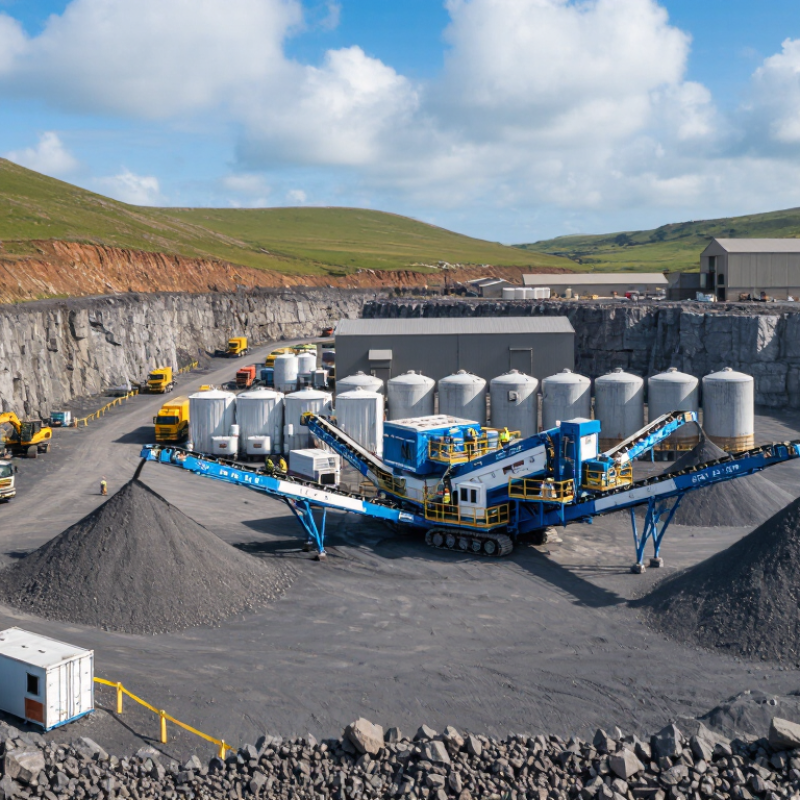
For global buyers in 2026, a mobile crushing plant is a movable system for reducing rocks, concrete, or recycled aggregates. It usually combines a hopper, vibrating feeder, crusher, screen, and conveyors on tracks or wheels. Unlike a fixed plant, it can follow a quarry face or move between construction sites.
The operating cycle is practical but carefully controlled. An excavator loads material into the hopper. The feeder regulates flow and removes unsuitable fines. A jaw crusher applies compression for primary reduction. An impact or cone crusher can refine the shape and size. The screen separates finished aggregates, while conveyors return oversized pieces for another pass. Operators monitor feed size, moisture, belt load, and engine temperature from the control panel.
The scale is significant. The USGS Mineral Commodity Summaries 2025 estimated U.S. crushed stone production at about 1.5 billion metric tons in 2024. The Global Aggregates Information Network places worldwide aggregate demand above 50 billion tonnes annually. These figures explain the value of flexible crushing equipment. Yet high output is not automatic. Wet clay can block screens, while poorly matched settings can increase dust and wear. In field operations, a small trial feed often reveals more than a sales sheet. Buyers should verify production under their actual rock type, target gradation, climate, and local safety requirements. The numbers can look excellent. Site reality may disagree.
Choosing a mobile crushing plant starts with material, output, and site movement. USGS Mineral Commodity Summaries 2025 reported roughly 1.5 billion metric tons of U.S. crushed-stone production in 2024. That scale shows why capacity planning matters. Small sites need agility.
A jaw plant suits hard, blasted rock and primary reduction. Its wide feed opening handles irregular boulders with fewer preparation steps.
An impact plant can produce a more cubical product, especially from softer limestone or recycled concrete. However, wear may rise sharply with abrasive feed.
Plant configuration should match the complete crushing stage, not one machine. A two-stage layout often combines jaw crushing with cone or impact crushing. Three-stage circuits add a secondary screen and tertiary crusher for tighter specifications.
USGS reported global cement production near 4.1 billion metric tons in 2024, indicating sustained demand for controlled aggregates and construction feedstock.
For road bases, an integrated jaw, cone, and screen circuit can reduce oversize return. For short projects, tracked mobility may save relocation time, fuel, and temporary foundations. For longer contracts, a wheeled system can offer faster transport between prepared sites.
That choice is rarely simple. Field experience also reveals a weakness: published capacity often assumes ideal feed, skilled operators, and clean chambers. Buyers should request test data, belt widths, screen area, fuel use, and realistic availability figures before comparing quotations.
Choosing a mobile crushing plant starts with the material, not the brochure. USGS Mineral Commodity Summaries 2025 reported about 1.5 billion metric tons of crushed stone produced in the United States during 2024. That scale shows why small design errors can become expensive quickly. Test your feed material for hardness, moisture, and maximum size. A granite quarry needs different wear protection from a recycled concrete site. Check the output curve, screening accuracy, fuel use, and transport dimensions. Track mobility matters when the working face moves every week. A machine that looks powerful may still struggle with wet feed.
Tips: Request a real sample test. Ask for hourly output at your target product sizes, not laboratory capacity. Confirm spare-part delivery times, remote diagnostics, operator training, and local service coverage. Also check noise and dust controls against the destination’s rules. These details often decide uptime.
The best choice should balance capacity with lifecycle cost. Compare fuel consumption per ton, jaw or cone liner life, conveyor maintenance, and the number of workers required. The World Bank’s Commodity Markets Outlook continues to highlight price volatility across industrial materials, so fixed-cost assumptions can age badly. I would leave a practical margin below the advertised maximum. It feels inefficient, but overloaded equipment loses more time through blockages and repairs. No spreadsheet predicts every muddy morning. A site trial remains valuable.
2026 Best Mobile Crushing Plant for Global Buyers?
Global Buyer Requirements: Capacity, Mobility, and Compliance
Global buyers usually start with capacity, but the rated figure is only one part of performance. A plant advertised at 300 tonnes per hour may produce less with wet feed, oversized rocks, or frequent material changes. Practical site reviews show why feed size, discharge grading, and operating hours deserve equal attention. That matters.
Ask for test results using material similar to your quarry. Confirm fuel consumption, liner life, dust control, and maintenance access. These details often influence operating cost more than headline capacity. Keep it practical.
Mobility can reduce setup time and support work across several sites. Tracked units suit rough ground and short movements, while wheel-mounted systems may simplify road transport. Check transport width, total weight, loading points, and setup time before purchase. A compact design is not automatically easy to move.
Compliance must match the destination country and the jobsite. Buyers should verify machinery safety documents, electrical requirements, emissions data, noise limits, and local transport rules. Documentation should be complete, consistent, and available in a usable language. Some regions also require permits before operation.
A pre-shipment inspection can reveal weak guarding, poor cable protection, or difficult service points. I would not rely on brochures alone. Real sites are dusty, uneven, and less forgiving than factory demonstrations. That honest gap deserves attention.
Global Buyer Requirements: Capacity, Mobility, and Compliance
Capacity data shows indicative industry benchmark ranges in metric tonnes per hour (t/h), not manufacturer-specific performance.
2026 Best Mobile Crushing Plant for Global Buyers?
Selecting the best mobile crushing plant in 2026 starts with the material, not the brochure. Confirm feed size, hardness, moisture, required output, and daily working hours. A practical capacity margin matters because actual quarry conditions rarely match laboratory figures. Keep spare wear parts available near the site. Delays become expensive quickly. Ask for verified performance data, service response times, operator training, and clear warranty terms. A cheaper purchase may create higher costs through fuel use, downtime, or difficult parts supply.
Installation needs more planning than many buyers expect. Inspect the haul road, ground strength, drainage, and turning space before delivery. Set the plant level, check emergency stops, and protect cables from water and moving equipment. Dust control and noise management should be designed before production begins. Local technical requirements must also be confirmed by qualified personnel. I have seen schedules fail because the foundation area was prepared too late. That mistake is avoidable, but it happens.
During operation, maintain a steady feed and watch product size, engine temperature, belt tracking, and abnormal vibration. Remove blockages only through approved shutdown procedures. Never treat a warning alarm as a minor issue. Maintenance should include daily visual checks, scheduled lubrication, screen inspections, and measured wear tracking. Keep a simple log with dates, readings, replaced parts, and unusual sounds. It improves troubleshooting. Still, records can be incomplete, so supervisors should verify critical entries instead of trusting paperwork blindly. Operational reviews every few weeks can reveal wasted fuel, uneven feeding, or training gaps before they become serious failures.
Match the plant with rock hardness, feed size, required output, and site movement. Small sites often need agility. Do not choose by capacity alone.
A jaw plant suits hard, blasted rock and primary reduction. Its wide opening can accept irregular boulders with limited preparation. It may produce a less cubical product.
An impact plant can make more cubical material from softer limestone or recycled concrete. Abrasive feed may increase wear sharply. That risk is easy to underestimate.
A two-stage circuit often combines jaw crushing with cone or impact crushing. It can reduce large rock and refine the product. Actual results depend on feed consistency.
A three-stage circuit adds screening and tertiary crushing for tighter specifications. It suits controlled aggregates and demanding road-base applications. More stages also mean more maintenance points.
Tracked units suit rough ground and short movements between nearby work areas. Wheeled systems may simplify road transport between prepared sites. A compact plant is not automatically easy to move.
Request test data using similar feed material, not ideal laboratory rock. Also confirm belt widths, screen area, fuel use, liner life, and realistic availability. Published capacity can look better than daily production.
Verify safety documents, electrical requirements, emissions data, noise limits, and transport rules. Some regions require operating permits. Documents should be complete and understandable.
Inspection can reveal weak guarding, damaged cable protection, or awkward service points. Check access around screens, belts, and maintenance doors. Factory demonstrations are cleaner than real sites.
A Mobile Crushing Plant is a flexible processing system designed to reduce raw materials such as stone, rock, and recycled aggregate into usable sizes directly at or near the job site. This overview explains how feeding, crushing, screening, and conveying work together, while comparing common jaw, cone, impact, and multi-stage configurations. It also outlines how primary, secondary, and tertiary crushing stages can be combined to meet different production goals.
For global buyers in 2026, selecting the best plant requires careful evaluation of capacity, material characteristics, mobility, fuel or power requirements, product quality, and environmental compliance. The article also covers practical considerations beyond the purchase, including transportation, installation, commissioning, operator training, routine inspection, wear-part management, and long-term maintenance. By matching the equipment configuration with local conditions, project scale, applicable regulations, and total operating costs, buyers can improve productivity, reduce downtime, and achieve a more reliable return on investment.

Ascend