Choosing the best Mobile Crusher Plant for sale in 2026 requires more than comparing prices and engine power. Buyers must match the equipment with rock type, feed size, output targets, and local working conditions. A compact plant may suit urban demolition sites, while a tracked jaw crusher can handle hard granite near a remote quarry.
This guide examines reliable mobile crushing solutions available worldwide. It considers jaw, cone, impact, and screening configurations. It also reviews capacity, fuel consumption, maintenance access, automation, transport dimensions, and after-sales support. These details matter when a machine operates beside dusty stockpiles, uneven roads, or limited service facilities.
Real projects often expose gaps in product brochures. Rated capacity may change with material moisture, operator skill, and feeding consistency. No single plant wins every application. That is worth remembering. Some supplier comparisons may also remain imperfect because prices, shipping costs, and regional specifications change frequently.
The discussion therefore focuses on practical selection rather than simple rankings. It highlights established manufacturers, inspection points, ownership costs, and questions buyers should ask before ordering. Readers can compare technical evidence, request verified references, and assess whether a proposed configuration suits their site. A lower purchase price may become expensive after repeated downtime. The best choice is usually the plant that delivers dependable output, manageable maintenance, and safe operation over many working seasons.
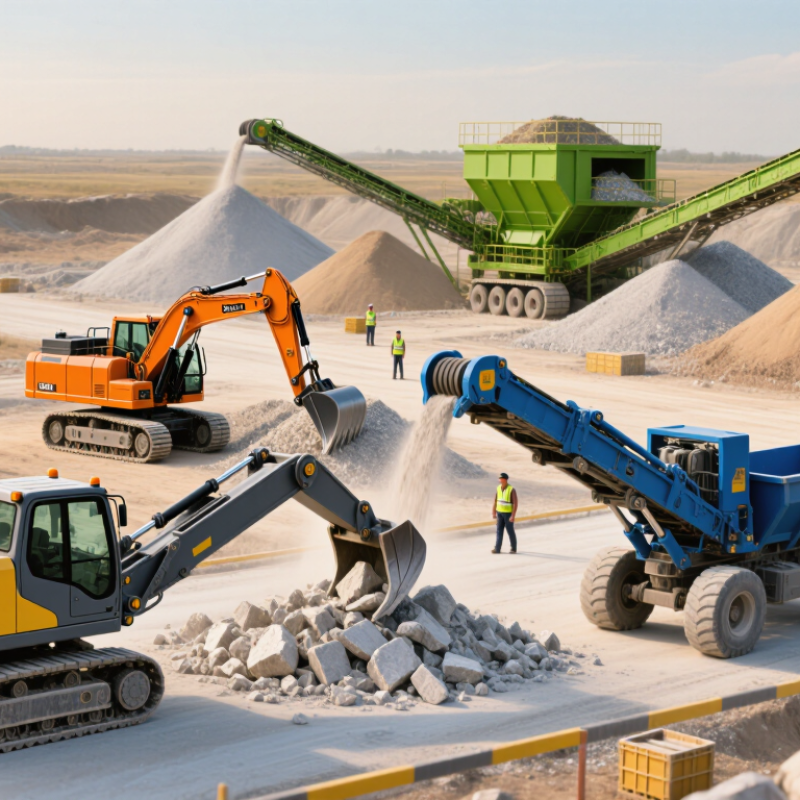
What Is a Mobile Crusher Plant?
A mobile crusher plant is a movable processing system for reducing rocks, concrete, and other aggregates. It combines a feeder, crusher, discharge conveyor, and sometimes a screening unit. The equipment can travel between sites on tracks or wheels. This reduces hauling distance and supports faster material reuse. On a road project, crushed stone can be produced beside the work area. Less truck movement may also reduce fuel use and dust exposure.
The U.S. Geological Survey’s Mineral Commodity Summaries 2025 reported about 1.5 billion metric tons of crushed stone production in the United States during 2024. That is not a mobile-crusher statistic. However, it shows the enormous scale of aggregate demand. A mobile plant is useful where deposits change, access is limited, or temporary production is needed. Output depends on feed size, rock hardness, moisture, and operator settings. Real results can disappoint without proper testing. Field experience still matters.
Tips: Check the required final size before choosing a crusher. Measure the largest feed regularly. Keep a safe clearance around conveyors and stockpiles. Ask for verified capacity under similar material conditions, not only laboratory figures. Inspect dust controls and emergency stops before operation. A short trial run can reveal blockages, uneven feeding, or excessive wear.
A mobile crusher plant turns large rocks into usable aggregates directly at the worksite. Material enters through a vibrating feeder, which controls the flow and removes smaller debris. The primary crusher then breaks the rock with compression or impact. A conveyor transfers the crushed material to a screen. Oversized stones return for another crushing cycle. This closed-loop process improves size control and reduces unnecessary transport.
In practical operation, ground stability matters as much as crusher capacity. Uneven soil can affect tracking, feeding, and discharge alignment. Operators should check the chamber before starting and monitor vibration, belt movement, and engine temperature. Dust suppression systems protect visibility and support safer working conditions. Real sites rarely behave perfectly. Wet clay may block the screen, while hard stone can increase wear quickly. A common mistake is trusting rated capacity without testing the actual feed material.
Tips: Keep the feed steady, not overloaded. Inspect liners, belts, and screen panels every shift. Remove trapped material only after proper isolation procedures. Record product size and fuel use during normal production. These records help reveal problems that a quick visual check may miss. Smaller adjustments often work better than sudden changes.
| Evaluation Dimension | Typical Data or Range | How It Works or Why It Matters | Suitable Applications | Selection Notes |
|---|---|---|---|---|
| Primary Crushing Unit | Jaw crusher or impact crusher | The feeder delivers raw material into the primary crusher, where compression or impact reduces large rocks into a transportable product size. | Quarrying, demolition waste, recycled concrete, and hard-rock processing | Jaw crushers are commonly selected for hard and abrasive rock; impact crushers are often preferred when a cubical product is required. |
| Secondary Crushing Unit | Cone or impact crusher | The secondary stage further reduces the material after primary crushing and improves control of the final particle-size distribution. | Aggregate production, road base, manufactured sand feed, and mineral processing | A cone crusher is generally suited to harder, abrasive materials, while an impact crusher can provide a higher proportion of cubical particles. |
| Screening Capacity | Approximately 100–500 tonnes per hour, depending on screen area, material, and configuration | Vibrating screens separate crushed material into different size fractions. Oversize particles can be returned through a recirculating conveyor. | Multi-size aggregate, asphalt recycling, concrete recycling, and soil separation | Actual output depends on feed gradation, moisture, bulk density, screen inclination, and the target cut size. |
| Maximum Feed Size | Commonly about 500–1,200 mm, depending on crusher model and opening | The feed opening determines the largest practical rock or demolition fragment that can enter the crusher without excessive blockage or reduced throughput. | Natural rock, blasted stone, concrete blocks, and construction debris | The feed should be prepared to match the manufacturer’s specified maximum lump size; oversize material may require pre-breaking. |
| Final Product Size | Typically 10–100 mm for aggregate applications; finer products require additional stages | Crusher settings and screen apertures control the final size. Closed-circuit operation returns oversize material for additional crushing. | Sub-base, drainage aggregate, asphalt aggregate, concrete aggregate, and fill material | Use a staged process when a narrow gradation or fine product is required. |
| Plant Configuration | Track-mounted, wheel-mounted, or modular mobile | Track-mounted plants move on crawler tracks, wheel-mounted plants are transported by trailer, and modular systems are assembled for semi-permanent locations. | Short-term projects, multiple quarry faces, demolition sites, and infrastructure construction | Track-mounted units offer strong on-site mobility; wheel-mounted units can be economical where frequent road transport is required. |
| Power System | Diesel-hydraulic, diesel-electric, or hybrid-electric drive | The power system drives the crusher, feeder, screen, conveyors, and hydraulic travel functions. Hybrid systems can reduce engine operating time when site power is available. | Remote sites, urban recycling projects, quarries, and temporary construction works | Compare fuel use, available electrical infrastructure, service access, and local emissions requirements before choosing a drive system. |
| Material Moisture Tolerance | Best performance is generally achieved with free-flowing feed and controlled moisture | Wet, sticky material can clog screens and chutes, reduce screening efficiency, and increase the risk of material buildup. | Dry rock, recycled concrete, asphalt chunks, and moderately moist aggregates | For high-moisture or clay-rich feed, consider scalping, grizzly pre-screening, wider chutes, and suitable anti-blinding measures. |
| Material Hardness and Abrasion | Low to very high, depending on rock type and wear characteristics | Hard and abrasive materials increase wear on jaw plates, blow bars, cone liners, screens, and conveyors. | Granite, basalt, limestone, recycled concrete, brick, and asphalt | Wear-part material, crushing principle, chamber design, and liner profile should be matched to the feed’s hardness and abrasiveness. |
| Typical Mobility Setup Time | Often several hours to one working day, depending on configuration and site conditions | Hydraulic folding conveyors, integrated feeders, and pre-wired controls can reduce setup time compared with fixed plants. | Road projects, demolition sites, rental operations, and changing quarry faces | Allow additional time for transport permits, ground preparation, electrical connections, guarding checks, and commissioning. |
| Conveyor Discharge Height | Commonly about 2.5–4.5 m, depending on conveyor arrangement | Discharge height affects stockpile capacity, loader access, and the risk of material rehandling. | Aggregate stockpiling, recycled material processing, and continuous site production | Check the required stockpile volume, site gradient, wind conditions, and available space around the plant. |
| Dust and Noise Control | Water sprays, enclosed transfer points, magnetic separators, and acoustic controls may be used | Dust suppression and noise reduction systems limit emissions generated during feeding, crushing, screening, and conveying. | Urban demolition, residential areas, recycling yards, and environmentally regulated sites | Local regulations may define permitted noise levels, water use, dust limits, and operating hours. |
| Metal Separation | Optional overband or head-pulley magnet | A magnet removes reinforcing steel and ferrous contaminants from recycled concrete or demolition material before they damage downstream equipment. | Concrete recycling, demolition waste, asphalt recycling, and mixed construction waste | Magnet position and belt speed should be selected according to the expected quantity and size of ferrous metal. |
| Fuel Consumption Factors | Varies with engine power, load, material, operating hours, and circuit design | Higher crushing ratios, excessive idling, blocked screens, and overfeeding can increase energy consumption per tonne. | All mobile crushing applications | Compare fuel consumption at a defined production rate rather than comparing engine size alone. |
| Closed-Circuit Operation | Crusher + screen + return conveyor | Finished-size material exits the circuit while oversize material returns to the crusher, improving product consistency. | Road base, graded aggregate, manufactured sand feed, and specification-based production | Closed circuits may require more power and space but can reduce the need for a separate screening stage. |
| Best Choice by Project Type | Defined by feed material, required capacity, final product, mobility, and regulations | No single mobile crusher plant is best for every site. The correct selection balances production targets, product specifications, operating cost, and transport requirements. | Quarrying, mining, recycling, road construction, and demolition | Request a process design based on representative feed samples and confirm capacity under the intended operating conditions. |
Choosing the right mobile crusher plant starts with the material, not the machine’s appearance.
Hard granite and basalt usually require a jaw crusher as the primary unit. Its compression action handles large, abrasive feed with dependable performance. The product may be uneven, though. A cone crusher suits secondary crushing when a tighter, more consistent shape is required. It works well with hard stone after primary reduction.
Limestone, asphalt, and clean concrete often respond better to an impact crusher. Its striking action can produce a cubical product for road bases and construction aggregates. Watch the wear parts. Abrasive feed can increase maintenance costs quickly.
Clay, wet soil, or sticky fines may block the feed system and reduce output. A mobile plant with effective pre-screening can remove unwanted fines before crushing. It can also protect the main chamber.
Tracked plants fit quarries, demolition areas, and temporary road projects because they move across uneven ground. Wheeled plants are practical when frequent transport between prepared sites is expected.
Field experience shows that moisture, feed size, and required output can change the best choice. No chart is perfect. A plant that performs well on dry limestone may struggle with wet recycled material.
Test samples, inspect the final grading, and discuss realistic capacity with a qualified engineer before purchase. That extra step often prevents an expensive mismatch.
How to Evaluate a Mobile Crusher Plant for Sale in 2026?
Evaluating a mobile crusher plant for sale requires more than checking its advertised capacity. Start with your feed material, such as limestone, granite, recycled concrete, or mixed rock. Measure the largest feed size and required output before comparing equipment. A plant producing 200 tons per hour may perform poorly when the material is wet, sticky, or highly abrasive. Real site conditions matter.
Inspect the complete crushing process, not only the main crusher. Check the feeder, screen, conveyor length, magnetic separator, and dust-control system. Ask for verified test results using material similar to yours. Review fuel consumption, engine hours, liner wear, and maintenance records. Small details count. A loose conveyor belt can reduce production and create safety risks.
Mobility also affects long-term value. Confirm transport dimensions, setup time, ground clearance, and track performance on uneven surfaces. Ask whether replacement parts and trained technicians are available in your region. Reliable documentation should include operating manuals, inspection records, and clear warranty terms. Do not trust capacity figures without context. They may reflect ideal conditions. A practical evaluation should compare ownership cost, downtime risk, product size, and operator requirements. One overlooked issue is noise near populated areas. Check local operating requirements before purchase. Even experienced buyers can miss this point. Recheck the numbers.
Indicative throughput benchmarks for comparing common mobile crusher plant configurations before purchase.
Capacity is shown in metric tonnes per hour. Actual output depends on feed size, rock hardness, moisture, crusher setting, screening efficiency, material flow, and operator experience. A suitable plant should be evaluated using both required capacity and the specific material-processing conditions.
Buying a mobile crusher plant in 2026 requires more than comparing purchase prices. Mordor Intelligence’s 2025 market report estimates mobile crushers and screeners will grow at roughly 4–5% annually. However, report methods differ, so treat projections as planning references, not guarantees. Your material, output target, and operating country matter more.
Inspect the machine near the actual worksite, if possible. Watch how quickly the feeder handles wet stone, oversized rock, and sticky clay. Ask for verified fuel consumption under similar conditions. A 250-ton-per-hour rating may change sharply with feed size and moisture. Confirm transport dimensions, axle limits, spare-part availability, and operator training before signing. Small details become expensive delays.
Ownership also includes emissions compliance. Check whether the engine meets local requirements, such as EU Stage V or US EPA Tier 4 standards. Review warranty terms, remote diagnostics, and service response times in writing. ISO 21873 provides useful terminology for mobile crushing machinery. Still, paperwork cannot replace a practical acceptance test. I would not rely on a brochure alone. That assumption can fail. Industry forecasts are helpful, but a three-year maintenance record from a comparable site may tell you more.
A vibrating feeder controls the material flow and removes smaller debris. The primary crusher reduces the rock by compression or impact. A conveyor moves crushed material to a screen. Oversized stones return for another cycle. This closed loop improves size control.
Uneven ground can affect tracking, feeding, and discharge alignment. The plant may shift slightly during operation. That creates inconsistent material flow. Check the working surface before starting. Capacity alone does not guarantee stable production.
Operators should watch vibration, belt movement, and engine temperature. They should inspect liners, belts, and screen panels. Record product size and fuel use. Small changes often reveal hidden problems. Visual checks are not enough.
A jaw crusher usually works well as the primary unit. Its compression action handles large, abrasive feed. The initial product may have uneven shapes. A cone crusher can improve later size consistency. Test the actual stone first.
An impact crusher often suits limestone, asphalt, and clean concrete. Its striking action can produce cubical aggregate. This shape works well for road bases and construction materials. Abrasive feed may wear parts quickly. Watch maintenance costs closely.
Wet clay can block the screen and reduce output. Sticky fines may restrict the feeding system. Effective pre-screening can remove unwanted fines early. This helps protect the main crushing chamber. Moisture is easy to underestimate.
Tracked plants suit quarries, demolition areas, and temporary road projects. They move more easily across uneven ground. Wheeled plants suit frequent transport between prepared sites. The best choice depends on site access and ground conditions. There is no perfect chart.
Start with the material, required grading, and expected output. Test representative samples before purchasing. Inspect the final product size during trials. Discuss realistic capacity with a qualified engineer. Rated capacity can look better than field performance.
A Mobile Crusher Plant is a flexible, self-contained crushing system designed to process materials directly at or near the worksite. It typically combines feeding, crushing, screening, and conveying equipment on a movable chassis, reducing the need for repeated material transportation. During operation, raw materials are loaded into the feeder, delivered to the crusher, reduced to the required size, and screened into different product grades. Oversized particles can be returned for additional crushing, while finished materials are discharged for construction, recycling, or aggregate applications.
Different plant configurations suit different materials: jaw crushers are suitable for primary crushing of hard rock, impact crushers work well with medium-hard materials and shaping requirements, and cone crushers are effective for secondary or fine crushing. When evaluating a Mobile Crusher Plant for sale in 2026, buyers should consider capacity, final product size, mobility, energy use, maintenance access, safety features, and total ownership cost. Global purchasers should also review transport arrangements, spare-parts availability, operator training, installation support, import procedures, and local technical standards before making a decision.

Ascend